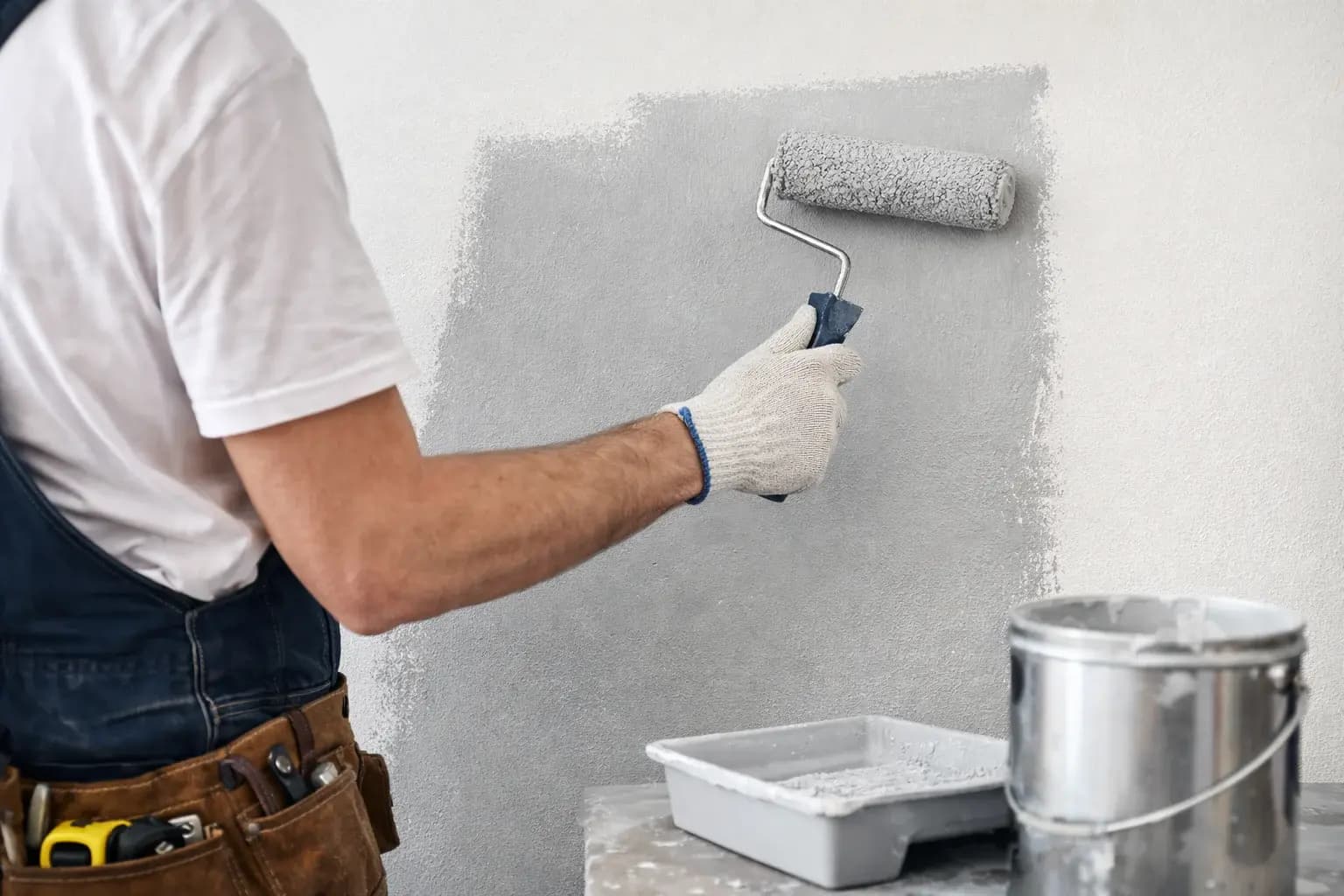
A practical interior room painting decision starts with the affected item, its condition and the surrounding materials. Protect the agreed room, prepare accepted sound surfaces and repaint complete wall areas in a planned sequence with defined trim boundaries.
Signs: a local repair or prior coating needs preparation before a new finish is considered or the surface is scuffed, patchy, weathered or no longer presents evenly. Causes: incompatible or unknown prior finishes that need checking or normal use, weather exposure or aged coating.
Painting a whole wall differs from covering a local mark. The sequence should allow preparation, cutting in and application across the accepted surface. Doors, returns and adjoining rooms need clear stopping points so the finish boundary is understood before work starts.
The room needs suitable ventilation and a practical route for people using the property. Discuss occupied areas and product requirements before scheduling. No universal odour-free or immediate-use guarantee should be inferred from the choice of an interior paint.
Protect the agreed room, prepare accepted sound surfaces and repaint complete wall areas in a planned sequence with defined trim boundaries. Limits: Ordinary sound interior surfaces only. No specialist wet-area systems, damp remediation, asbestos, structural repair or electrical and plumbing work.