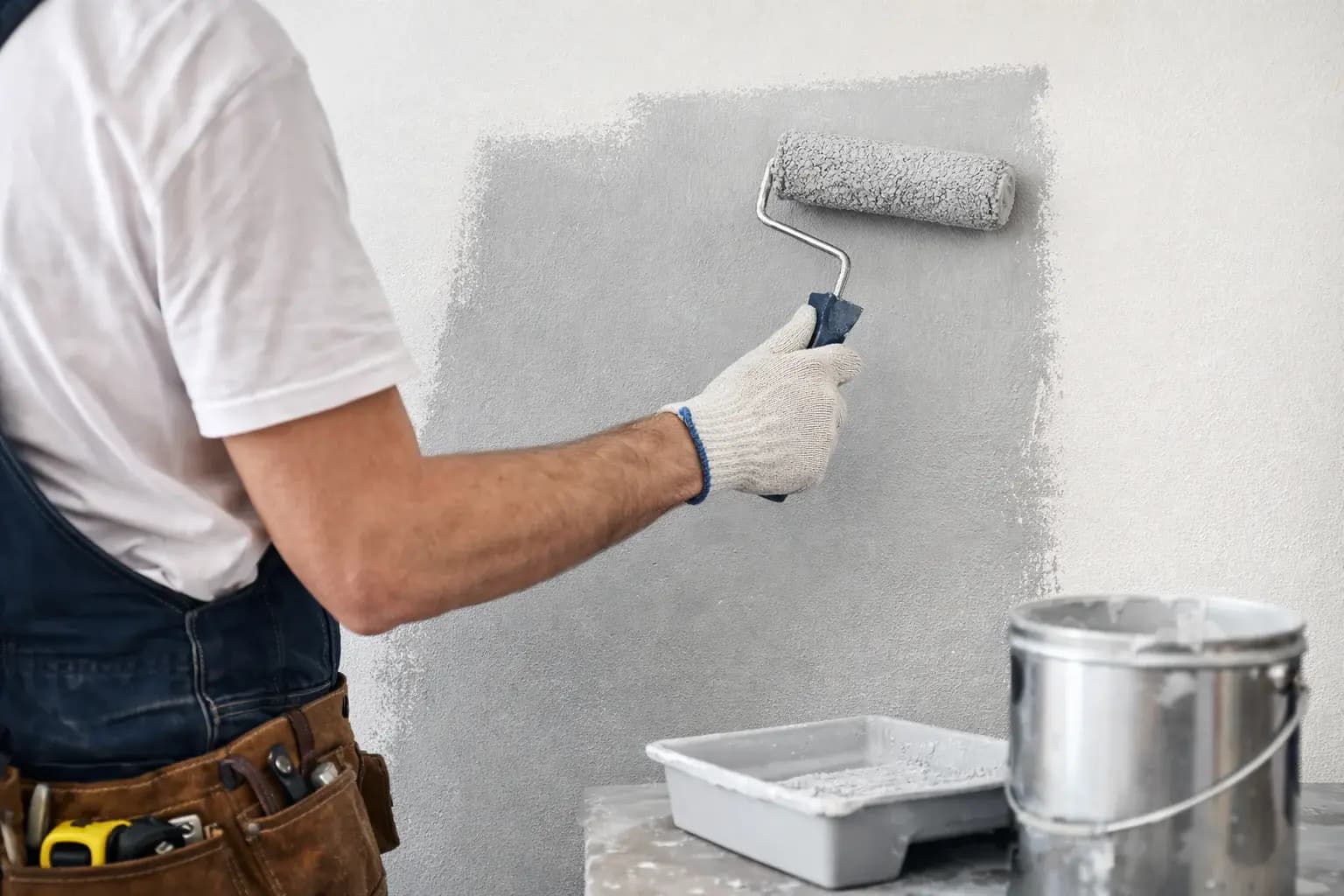
A practical interior wall touch up painting decision starts with the affected item, its condition and the surrounding materials. Agree suitable light preparation and a local paint area; consider a bounded wall section where a small spot would remain conspicuous.
Signs: a local repair or prior coating needs preparation before a new finish is considered or the surface is scuffed, patchy, weathered or no longer presents evenly. Causes: surface damage that needs preparation before finishing or incompatible or unknown prior finishes that need checking.
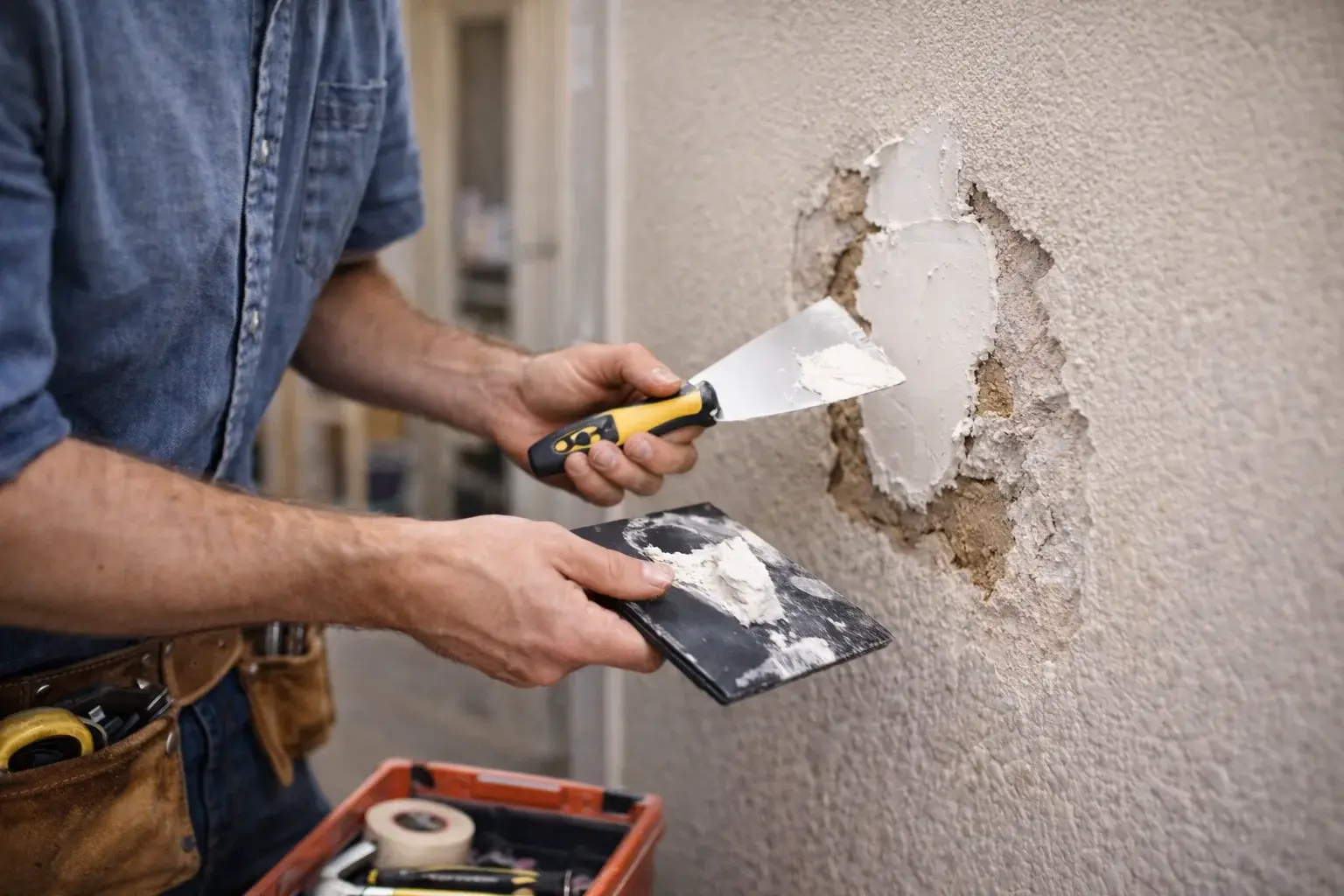
A mark on intact paint is different from a dent, torn wall surface or loose coating. Show the affected area close up and from across the room. The underlying condition decides whether touch-up painting is appropriate or a separate repair is needed.
Peeling, powdery or poorly bonded paint may not accept a simple topcoat. The surface and any preparation method need review. Hazardous coatings or suspected asbestos must not be disturbed as part of an ordinary small painting request.
The agreed service covers sound interior walls, light preparation, agreed local coating and colour-match assessment. Exclusions: Whole-house repainting, external facades, unresolved damp, lead/asbestos disturbance, structural patch work.