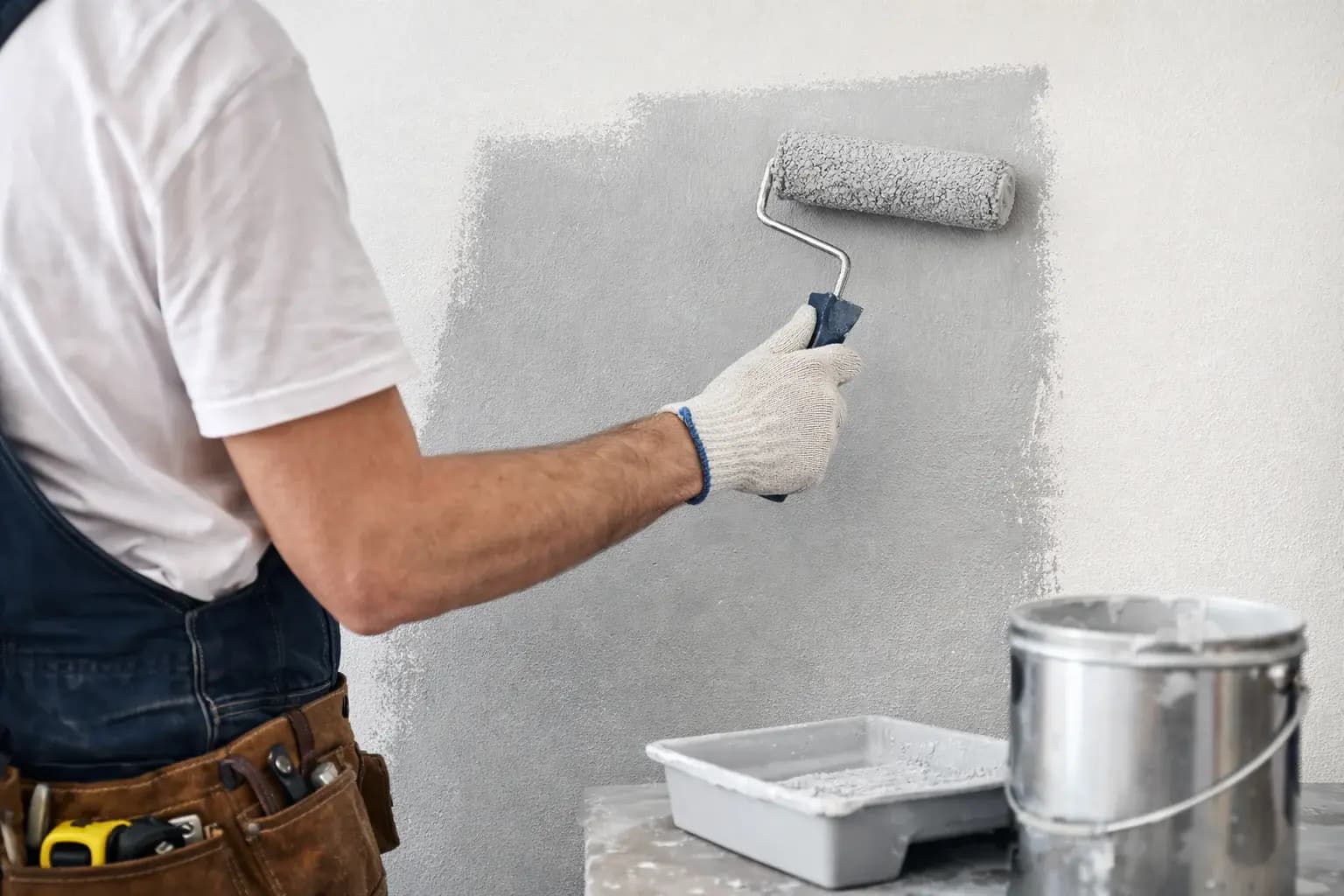
A practical internal door painting decision starts with the affected item, its condition and the surrounding materials. Protect suitable hardware and adjacent finishes, prepare compatible surfaces and apply the agreed internal-door coating.
Signs: the door closes poorly despite an otherwise sound visible opening or the door sags, rubs, sticks or has uneven gaps around the opening. Causes: loose fixings, minor alignment drift or ordinary timber movement or normal wear in hinges, latches or compatible mechanical hardware.
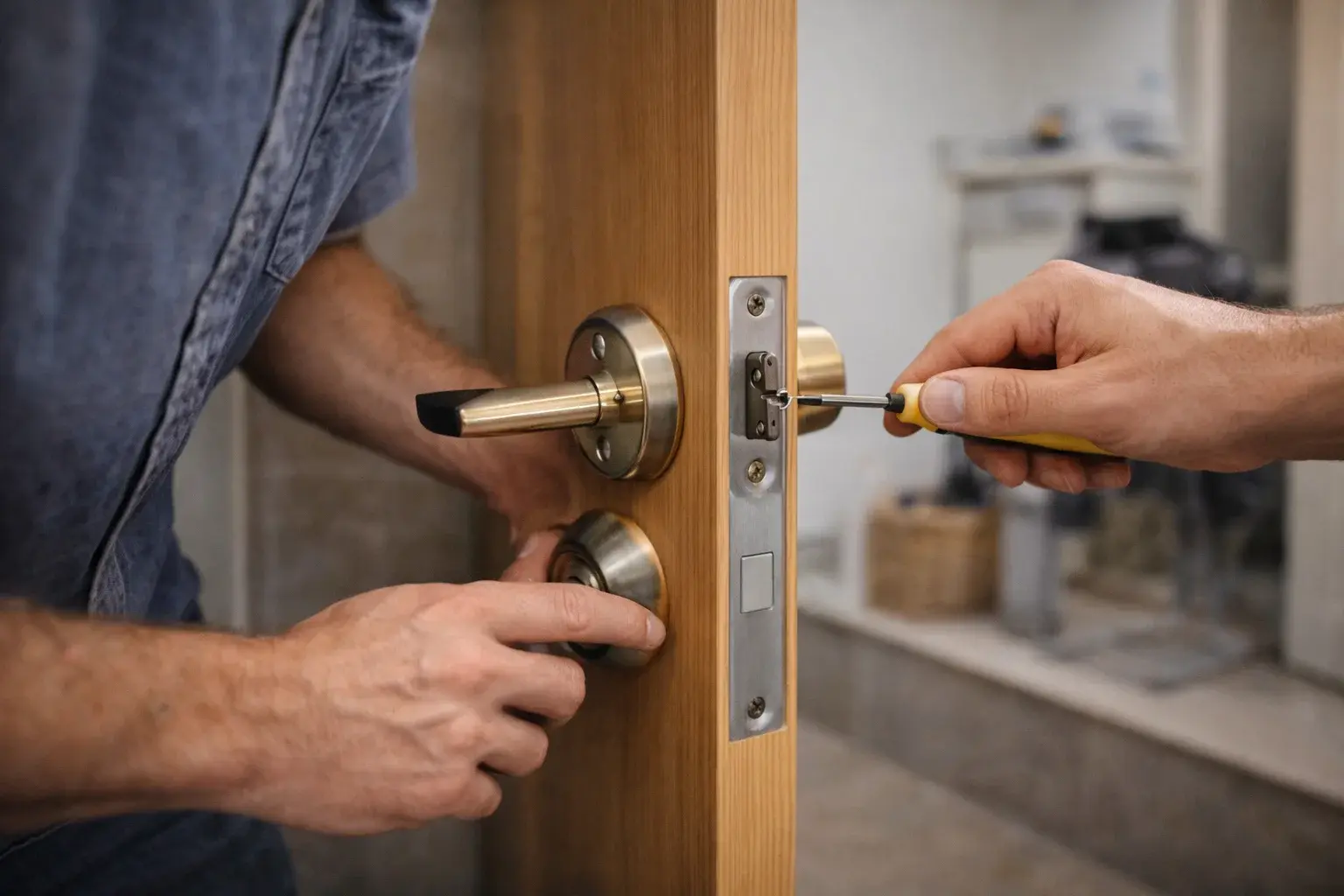
Rubbing, loose hinges and latch problems should be identified before painting. Extra paint can make tight clearances worse. Suitable hardware repairs can be requested separately, but a new finish is not a substitute for correcting an underlying door movement issue.
Handles, hinges and nearby floor surfaces need an agreed protection plan. Explain whether the hardware is delicate or has a specialist function. Removal or refitting of components should be discussed, and no alteration to a certified door assembly is implied.
The agreed service covers small internal-door painting jobs, compatible surface preparation and agreed finish. Exclusions: Fire/smoke door certification or modifications, exterior coating systems, hazardous paint stripping, door replacement.