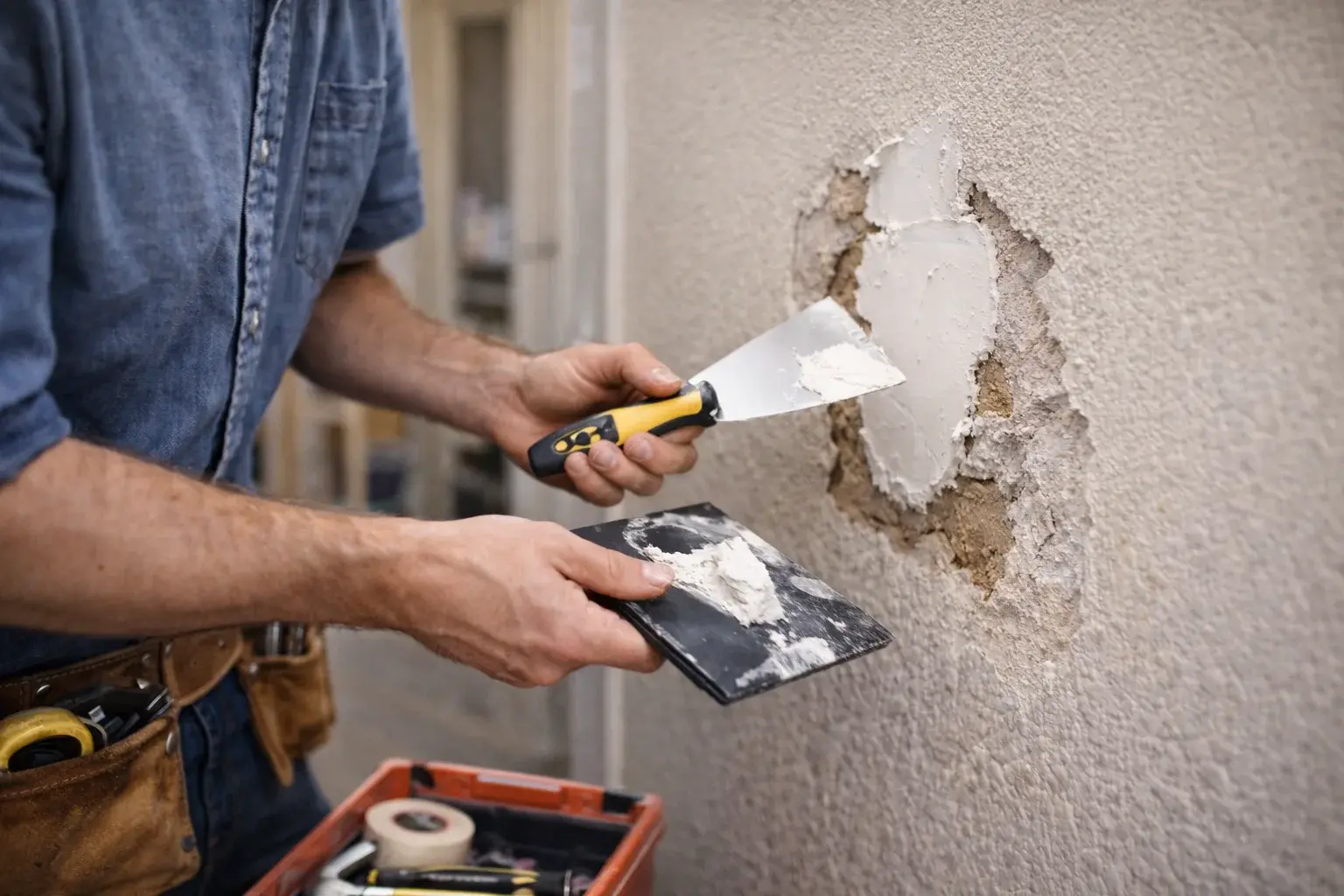
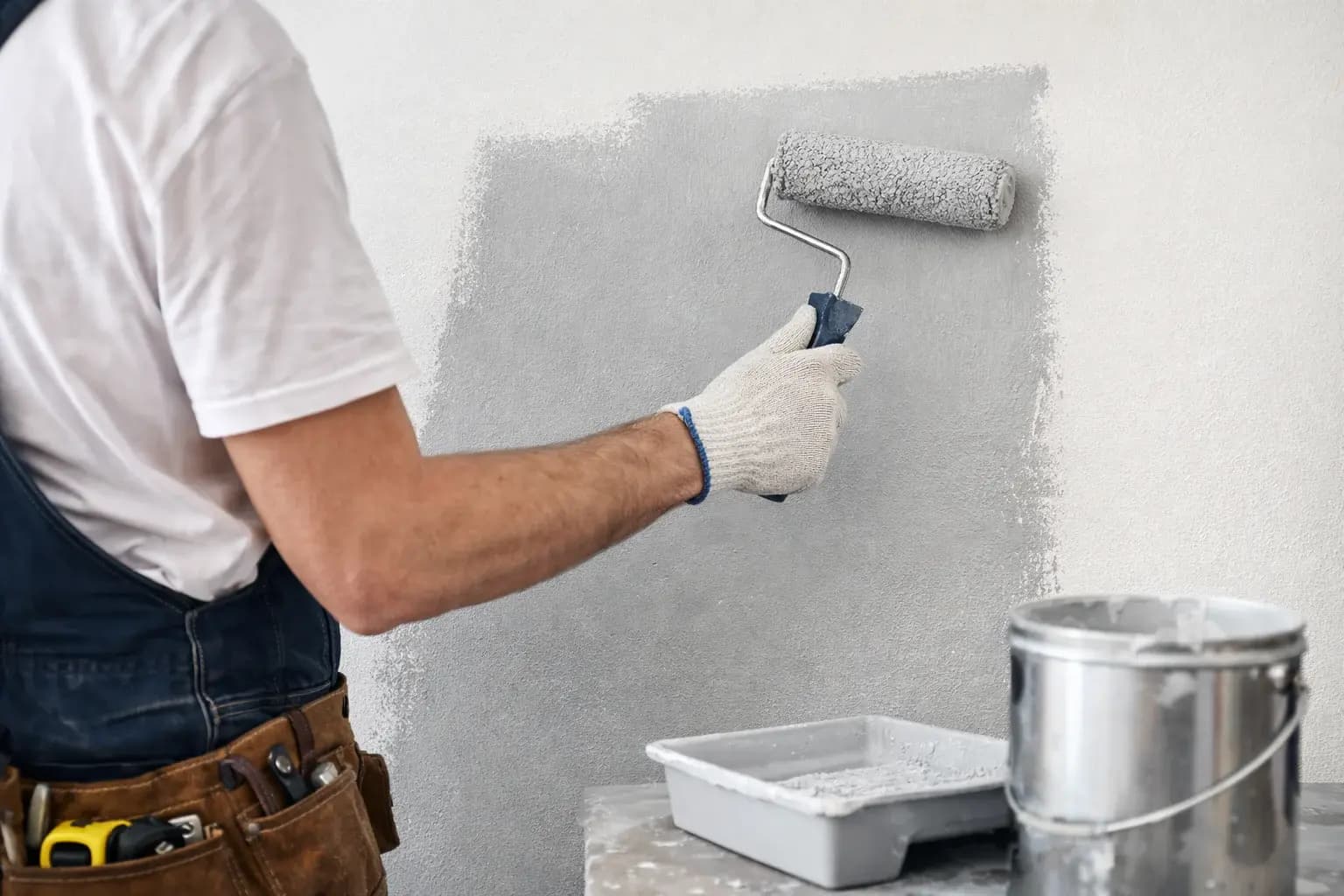
A practical ceiling patch repair decision starts with the affected item, its condition and the surrounding materials. Prepare the accepted small patch, provide suitable ordinary edge support and finish the joints in the required drying stages.
Signs: a stable local hole, dent, crack, patch edge or surface mark is visible or a finish looks damaged and needs preparation before painting. Causes: minor finish movement at a suitable stable surface or a previous patch or coating that needs preparation.
A close-up can hide the scale of ceiling damage. Include a wide photograph and measurements so a minor patch can be distinguished from a large replacement area. Widespread damage or movement is not brought into handyman scope by describing it as several small holes.
A patch needs suitable support at its edges for an ordinary repair to hold its shape. Accessible minor support is different from repairing ceiling framing. If the surrounding material or structure is unsound, the job needs review before a patching method is agreed.
Prepare the accepted small patch, provide suitable ordinary edge support and finish the joints in the required drying stages. Limits: Minor dry stable accessible non-structural patches only. No sagging ceilings, active leaks, structural diagnosis, framing repairs, asbestos or hazardous materials.