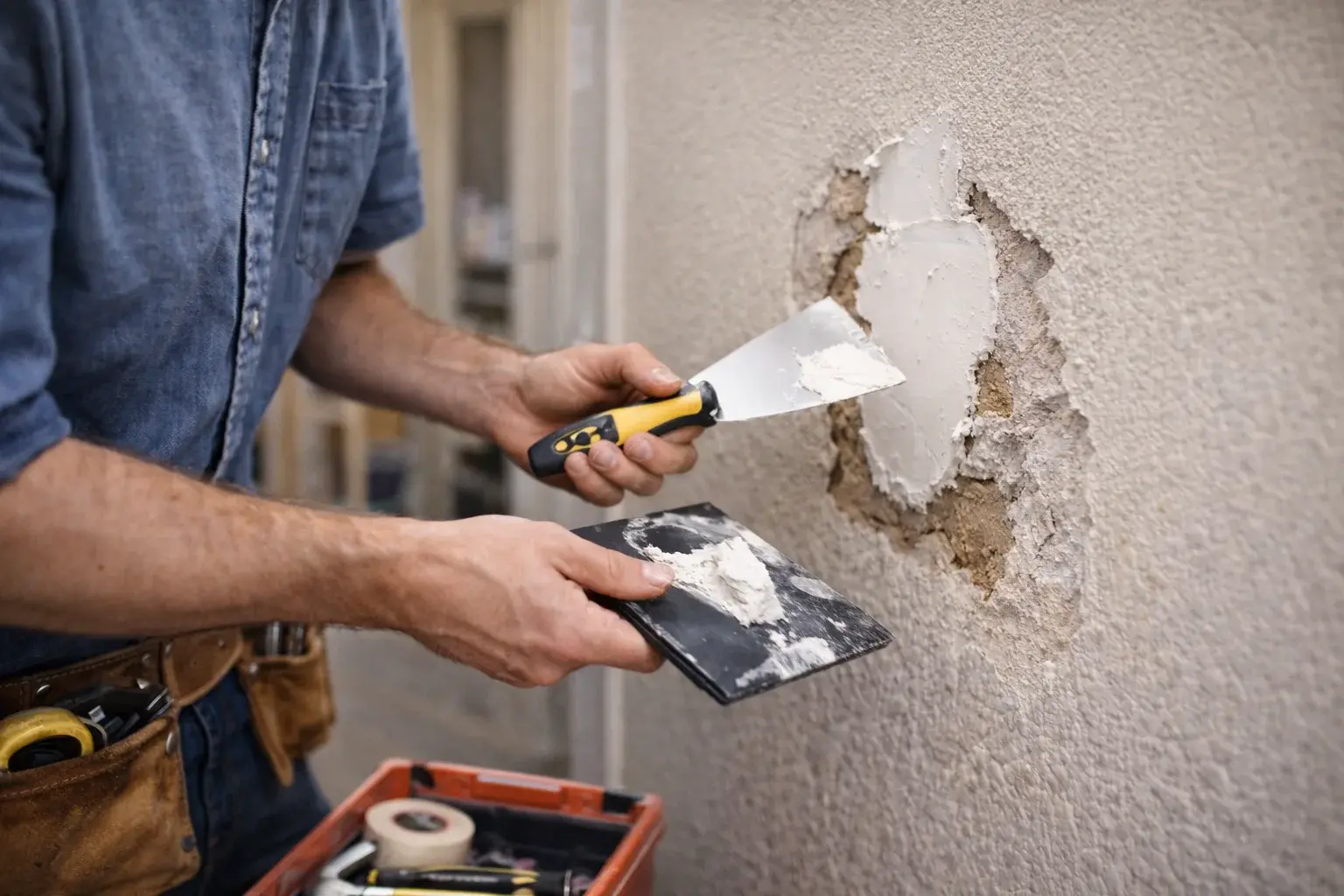
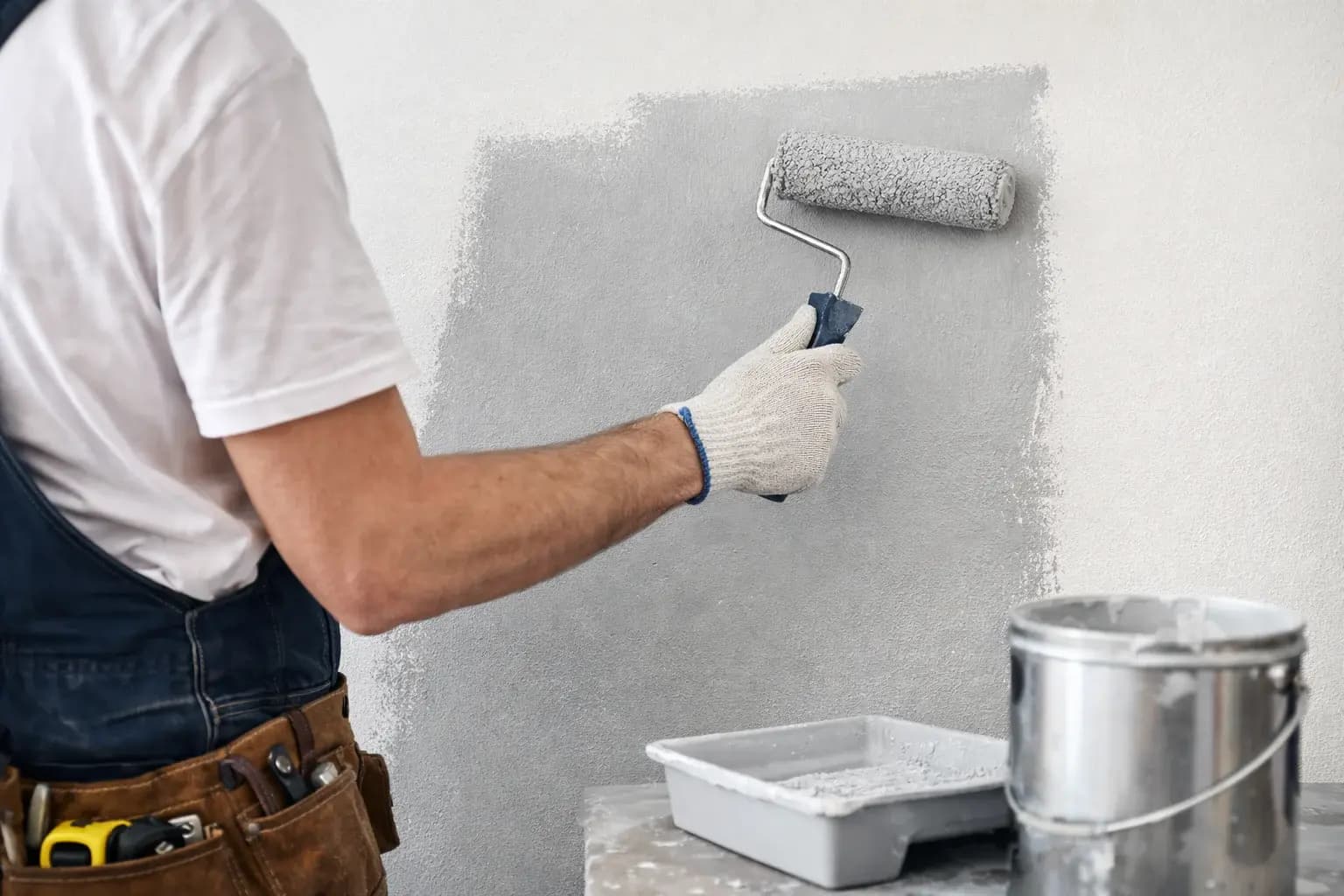
ceiling patch repair can be appropriate when a stable local hole, dent, crack, patch edge or surface mark is visible. Confirm a dry stable minor patch and safe overhead access; sagging, ongoing moisture or uncertain hazardous material needs separate assessment.
Signs: a finish looks damaged and needs preparation before painting or a local area needs a bounded cosmetic repair rather than an assumed structural diagnosis. Causes: a previous patch or coating that needs preparation or minor finish movement at a suitable stable surface.
The junction between new and existing material affects the visible result. Suitable finishing stages are needed around the patch rather than simply filling the centre. Existing texture, previous repairs and side lighting can limit how closely the area blends before decoration.
A close-up can hide the scale of ceiling damage. Include a wide photograph and measurements so a minor patch can be distinguished from a large replacement area. Widespread damage or movement is not brought into handyman scope by describing it as several small holes.
Allow the patch materials to dry as specified before decoration. Agree whether ceiling painting is separate and discuss visible finish limitations. Limits: Minor dry stable accessible non-structural patches only. No sagging ceilings, active leaks, structural diagnosis, framing repairs, asbestos or hazardous materials.