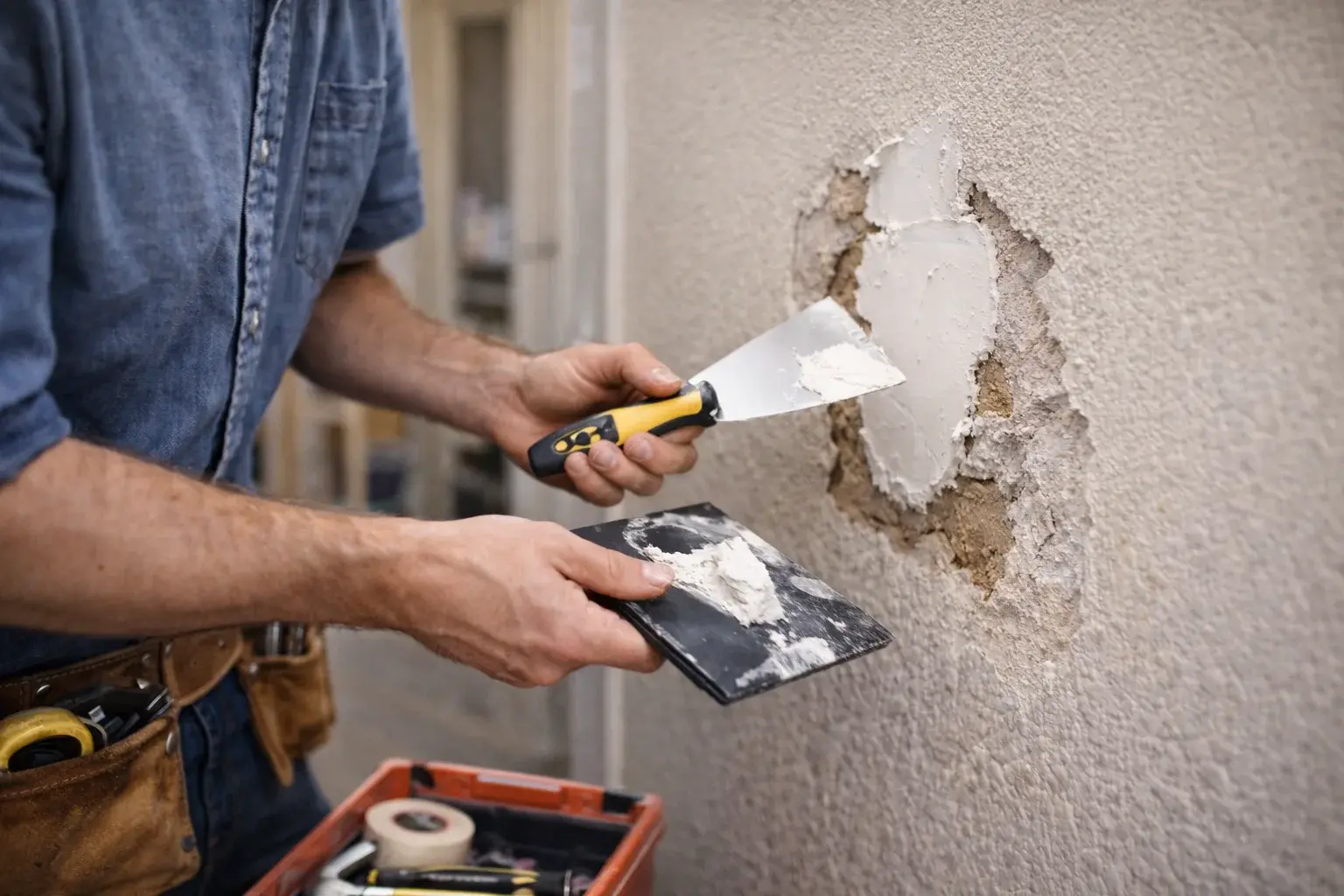
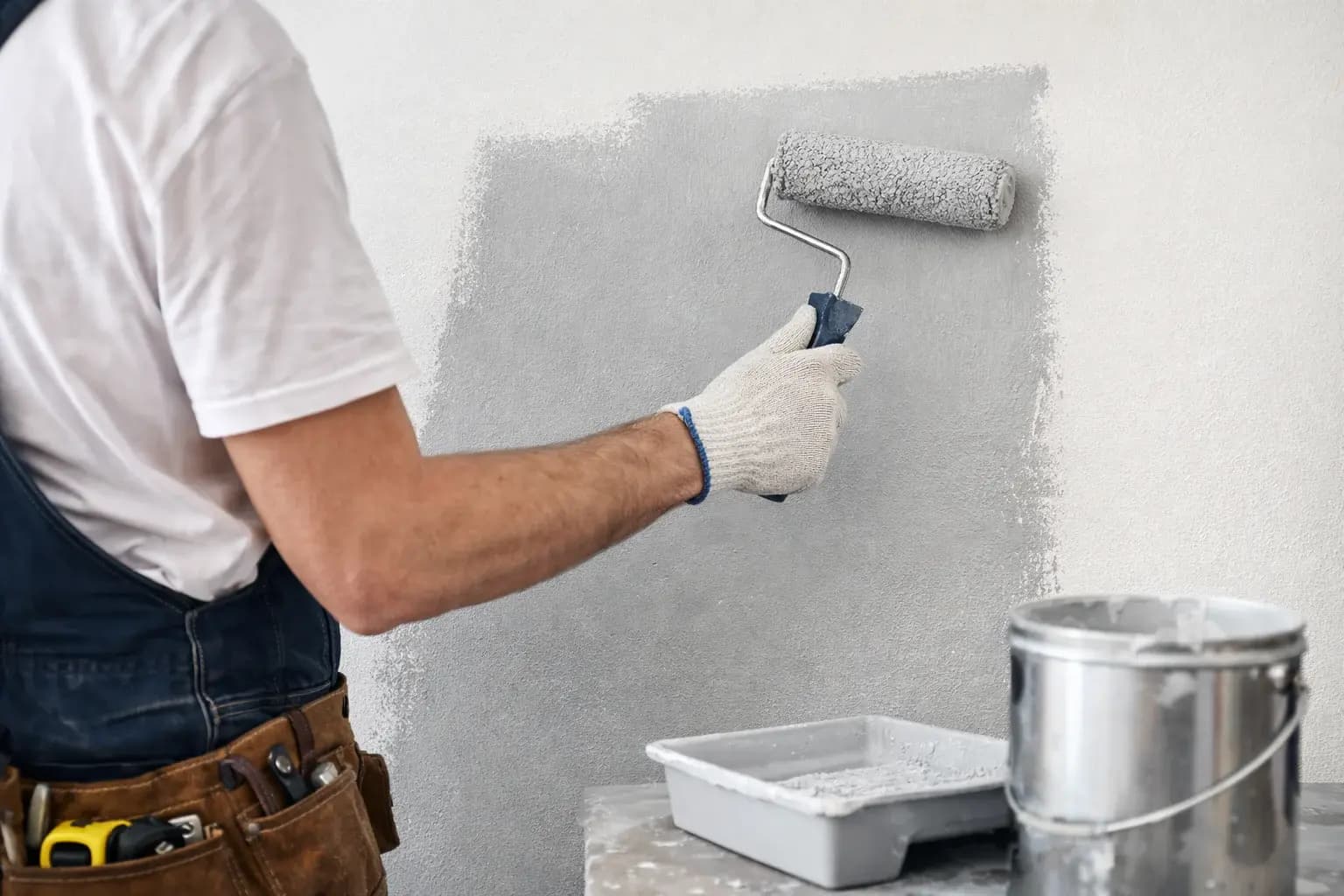
ceiling patch repair can be appropriate when a stable local hole, dent, crack, patch edge or surface mark is visible. Confirm a dry stable minor patch and safe overhead access; sagging, ongoing moisture or uncertain hazardous material needs separate assessment.
Signs: a stable local hole, dent, crack, patch edge or surface mark is visible or a finish looks damaged and needs preparation before painting. Causes: a previous patch or coating that needs preparation or minor finish movement at a suitable stable surface.
A close-up can hide the scale of ceiling damage. Include a wide photograph and measurements so a minor patch can be distinguished from a large replacement area. Widespread damage or movement is not brought into handyman scope by describing it as several small holes.
Patch and joint products have drying requirements that affect scheduling. A small area does not necessarily mean a single uninterrupted visit. Discuss the material stages and room access without expecting an unsupported fixed completion time from the dimensions alone.
fill and prepare a suitable shallow surface repair. fit a local patch where backing and material condition allow. Limits: Minor dry stable accessible non-structural patches only. No sagging ceilings, active leaks, structural diagnosis, framing repairs, asbestos or hazardous materials.