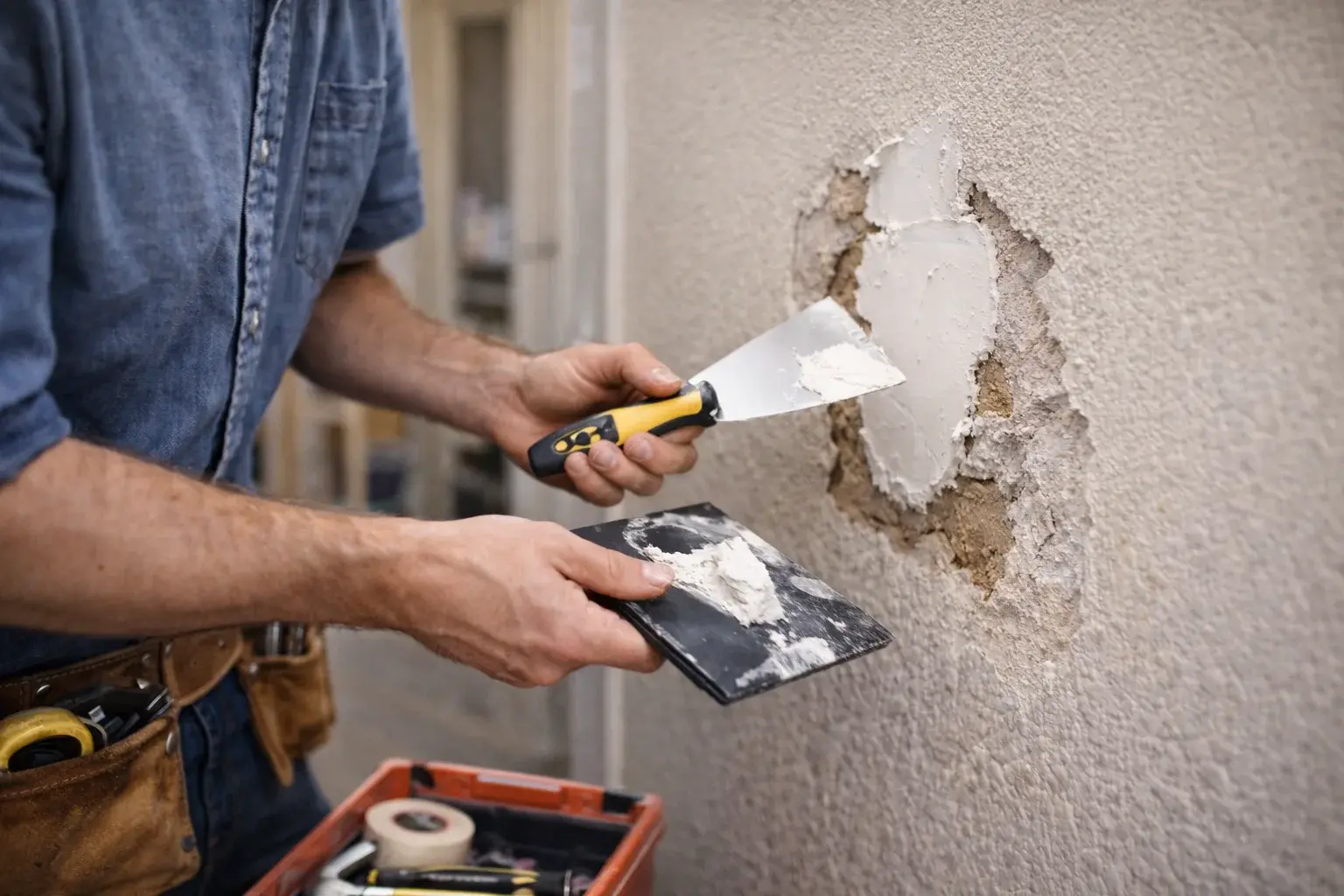
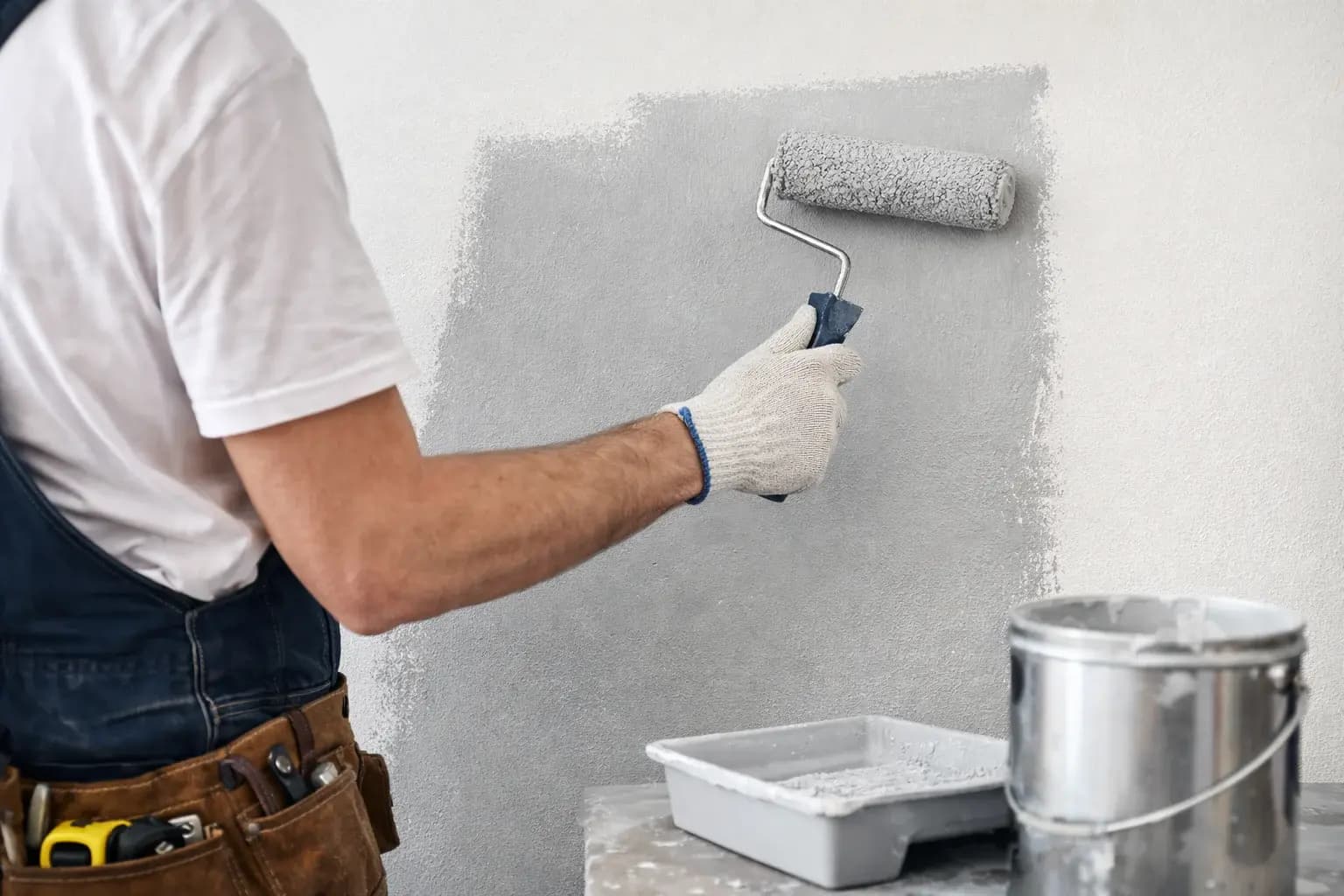
A practical ceiling patch repair decision starts with the affected item, its condition and the surrounding materials. Prepare the accepted small patch, provide suitable ordinary edge support and finish the joints in the required drying stages.
Signs: a local area needs a bounded cosmetic repair rather than an assumed structural diagnosis or a stable local hole, dent, crack, patch edge or surface mark is visible. Causes: minor finish movement at a suitable stable surface or ordinary impact damage or local surface wear.
Patch and joint products have drying requirements that affect scheduling. A small area does not necessarily mean a single uninterrupted visit. Discuss the material stages and room access without expecting an unsupported fixed completion time from the dimensions alone.
Overhead work needs a clear protected area beneath it. Explain furniture, floor coverings and fixtures before the visit. Safe access may require more space than the hole itself suggests, and electrical fixtures must not be moved or disconnected as part of patching.
Prepare the accepted small patch, provide suitable ordinary edge support and finish the joints in the required drying stages. Limits: Minor dry stable accessible non-structural patches only. No sagging ceilings, active leaks, structural diagnosis, framing repairs, asbestos or hazardous materials.