



Access arranged
Clear the immediate working area where safe and explain heavy furniture or restricted entry. For rentals or managed properties, agree the appropriate permission and identify the person who can provide access.
Melbourne handyman & property maintenance
Plaster & Wall Repairs · Doncaster East
A useful ceiling patch repair enquiry in Doncaster East shows both the item and its surroundings. Show the whole ceiling, the damaged area and its dimensions, with room height and any known history of moisture. Fix Nik can explain what affects suitable work on small dry stable non-structural ceiling patches with safe access, without assuming a solution before the details are reviewed.
Service overview
A practical ceiling patch repair decision starts with the affected item, its condition and the surrounding materials. Prepare the accepted small patch, provide suitable ordinary edge support and finish the joints in the required drying stages.
Signs: a local area needs a bounded cosmetic repair rather than an assumed structural diagnosis or a finish looks damaged and needs preparation before painting. Causes: minor finish movement at a suitable stable surface or a previous patch or coating that needs preparation.
The repair needs a compatible material and finish. Provide any known product information without disturbing an unknown ceiling to identify it. Suspected asbestos or other hazardous material is outside this service and should be assessed appropriately before any surface preparation.
A close-up can hide the scale of ceiling damage. Include a wide photograph and measurements so a minor patch can be distinguished from a large replacement area. Widespread damage or movement is not brought into handyman scope by describing it as several small holes.
Prepare the accepted small patch, provide suitable ordinary edge support and finish the joints in the required drying stages. Limits: Minor dry stable accessible non-structural patches only. No sagging ceilings, active leaks, structural diagnosis, framing repairs, asbestos or hazardous materials.
Doncaster East property context
Planning ceiling patch repair in Doncaster East starts with the actual item and its setting. Show the whole ceiling, the damaged area and its dimensions, with room height and any known history of moisture. The address identifies the locality; it does not establish the construction, condition or accessibility of the property. A useful Doncaster East enquiry identifies the affected room or outdoor area, explains what has changed and includes wide and close photographs. Measurements and access notes help separate urgent repairs from work that can be grouped into a later visit.
Planning the work
Clear the immediate working area where safe and explain heavy furniture or restricted entry. For rentals or managed properties, agree the appropriate permission and identify the person who can provide access.
Show the whole ceiling, the damaged area and its dimensions, with room height and any known history of moisture. Keep labels and instructions available so the item can be identified accurately instead of relying on a general description.
Confirm a dry stable minor patch and safe overhead access; sagging, ongoing moisture or uncertain hazardous material needs separate assessment. Any unresolved requirement should be explained before committing to a visit or buying additional materials.
Prepare the accepted small patch, provide suitable ordinary edge support and finish the joints in the required drying stages. Identify any additional items separately so the scope and preparation are understood by everyone arranging the work.
Common situations
The junction between new and existing material affects the visible result. Suitable finishing stages are needed around the patch rather than simply filling the centre. Existing texture, previous repairs and side lighting can limit how closely the area blends before decoration.
A stain or softened area can indicate an unresolved condition, but photographs cannot diagnose it. The accepted task starts with a dry stable substrate. Leak investigation, structural crack diagnosis and sagging-ceiling work are excluded rather than covered over with a new patch.
Patch and joint products have drying requirements that affect scheduling. A small area does not necessarily mean a single uninterrupted visit. Discuss the material stages and room access without expecting an unsupported fixed completion time from the dimensions alone.
How it works
Show the whole ceiling, the damaged area and its dimensions, with room height and any known history of moisture.
Confirm a dry stable minor patch and safe overhead access; sagging, ongoing moisture or uncertain hazardous material needs separate assessment.
Prepare the accepted small patch, provide suitable ordinary edge support and finish the joints in the required drying stages.
Confirm the Doncaster East address, access contact and preparation. Mention anything that limits safe handling or use of the space before scheduling.
Allow the patch materials to dry as specified before decoration. Agree whether ceiling painting is separate and discuss visible finish limitations.
FAQ
Overhead work needs a clear protected area beneath it. Explain furniture, floor coverings and fixtures before the visit. Safe access may require more space than the hole itself suggests, and electrical fixtures must not be moved or disconnected as part of patching.
fill and prepare a suitable shallow surface repair. fit a local patch where backing and material condition allow. Compatibility and condition are checked first.
Show the whole ceiling, the damaged area and its dimensions, with room height and any known history of moisture. Include a wide view as well as close details, keeping product labels readable. Do not dismantle a difficult or unsafe item just to take photographs; explain the access limitation instead.
For ceiling patch repair, include measurements, product details and access information with the existing quote request. Include your Doncaster East address and access details so Fix Nik can review the work and explain the next step.
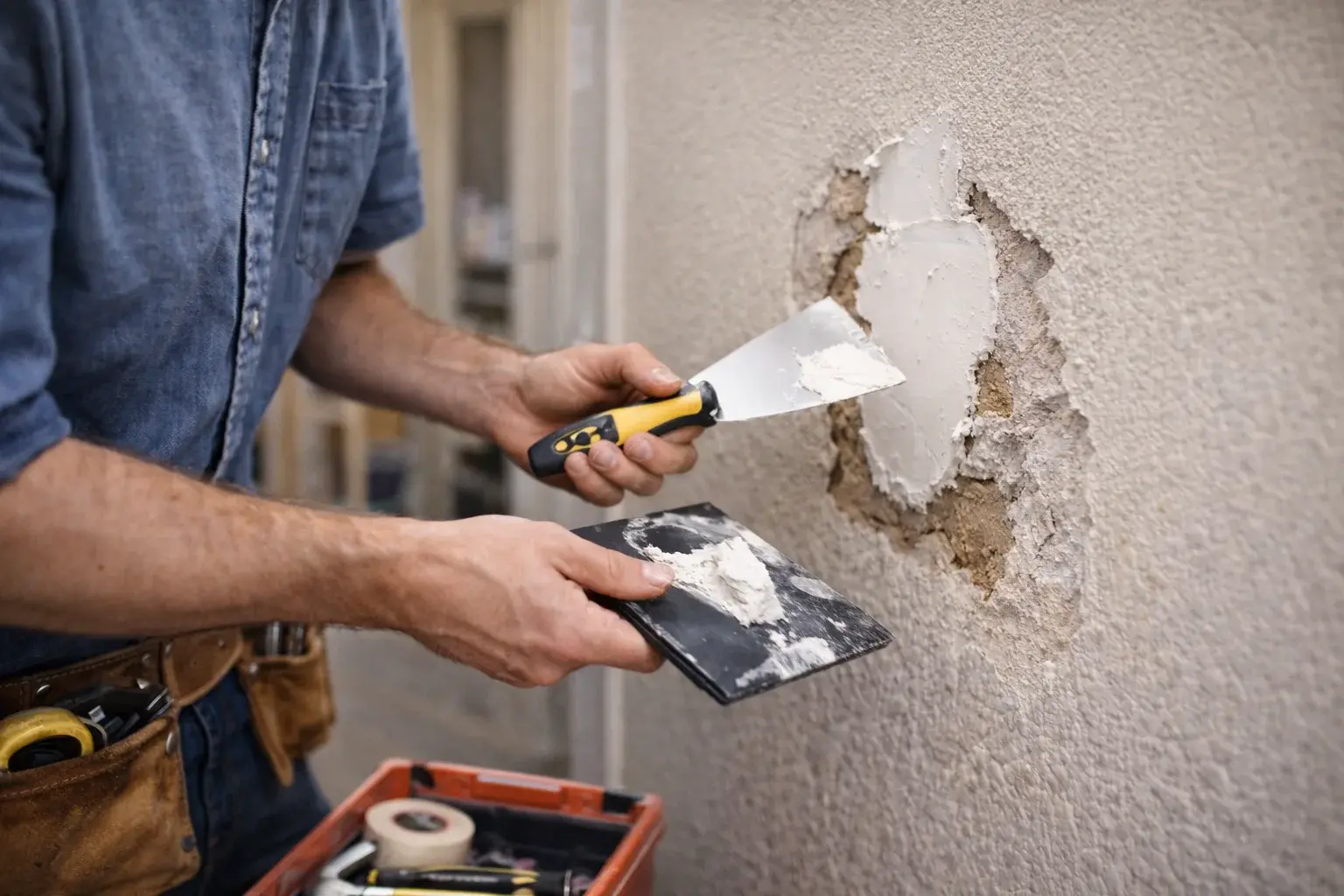
Ceiling Patch Repair
small dry stable non-structural ceiling patches with safe access

A stain or softened area can indicate an unresolved condition, but photographs cannot diagnose it. The accepted task starts with a dry stable substrate. Leak investigation, structural crack diagnosis and sagging-ceiling work are excluded rather than covered over with a new patch.
The repair needs a compatible material and finish. Provide any known product information without disturbing an unknown ceiling to identify it. Suspected asbestos or other hazardous material is outside this service and should be assessed appropriately before any surface preparation.
The junction between new and existing material affects the visible result. Suitable finishing stages are needed around the patch rather than simply filling the centre. Existing texture, previous repairs and side lighting can limit how closely the area blends before decoration.
A close-up can hide the scale of ceiling damage. Include a wide photograph and measurements so a minor patch can be distinguished from a large replacement area. Widespread damage or movement is not brought into handyman scope by describing it as several small holes.