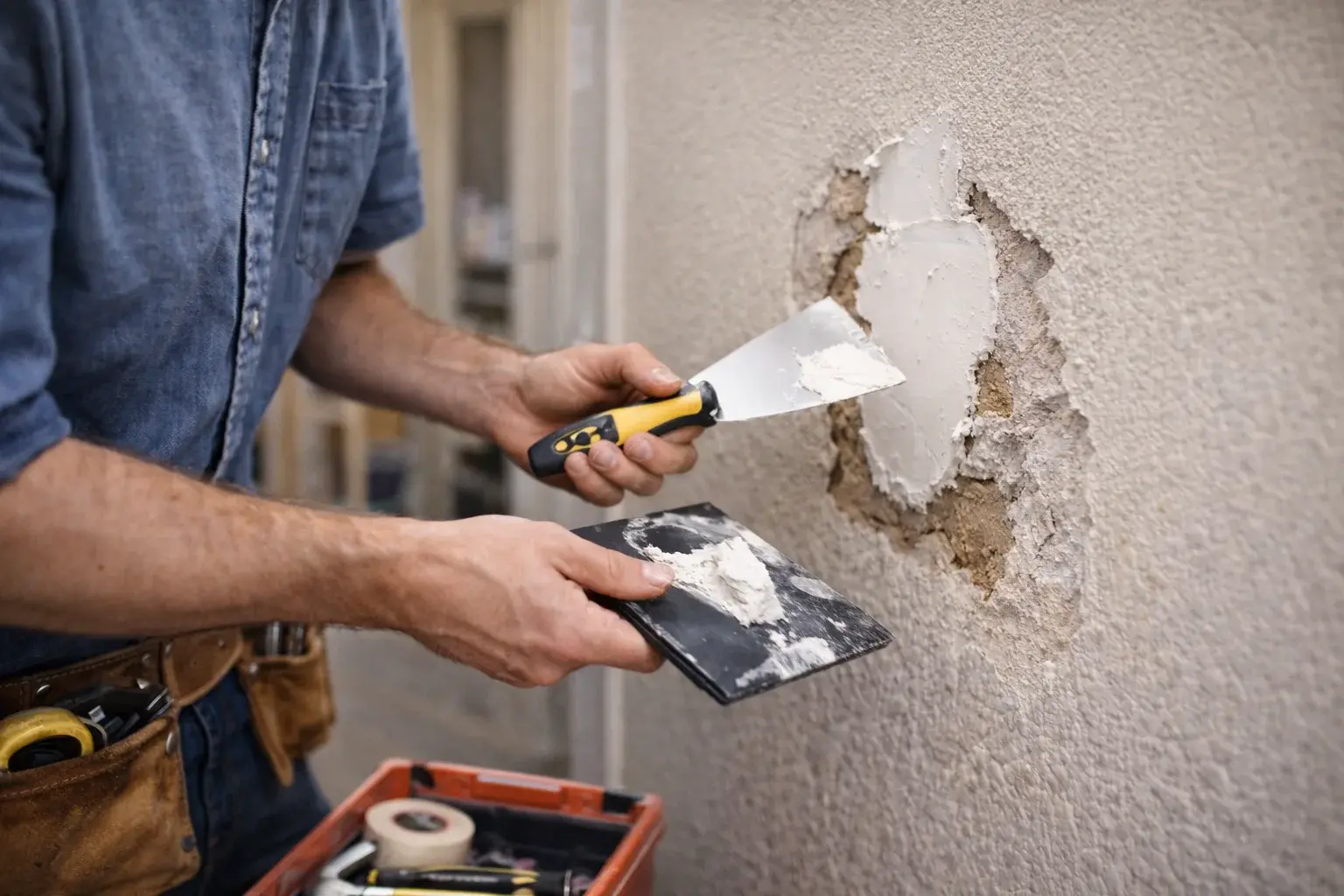
ceiling patch repair can be appropriate when a stable local hole, dent, crack, patch edge or surface mark is visible. Confirm a dry stable minor patch and safe overhead access; sagging, ongoing moisture or uncertain hazardous material needs separate assessment.
Signs: a finish looks damaged and needs preparation before painting or a stable local hole, dent, crack, patch edge or surface mark is visible. Causes: a previous patch or coating that needs preparation or minor finish movement at a suitable stable surface.
A stain or softened area can indicate an unresolved condition, but photographs cannot diagnose it. The accepted task starts with a dry stable substrate. Leak investigation, structural crack diagnosis and sagging-ceiling work are excluded rather than covered over with a new patch.
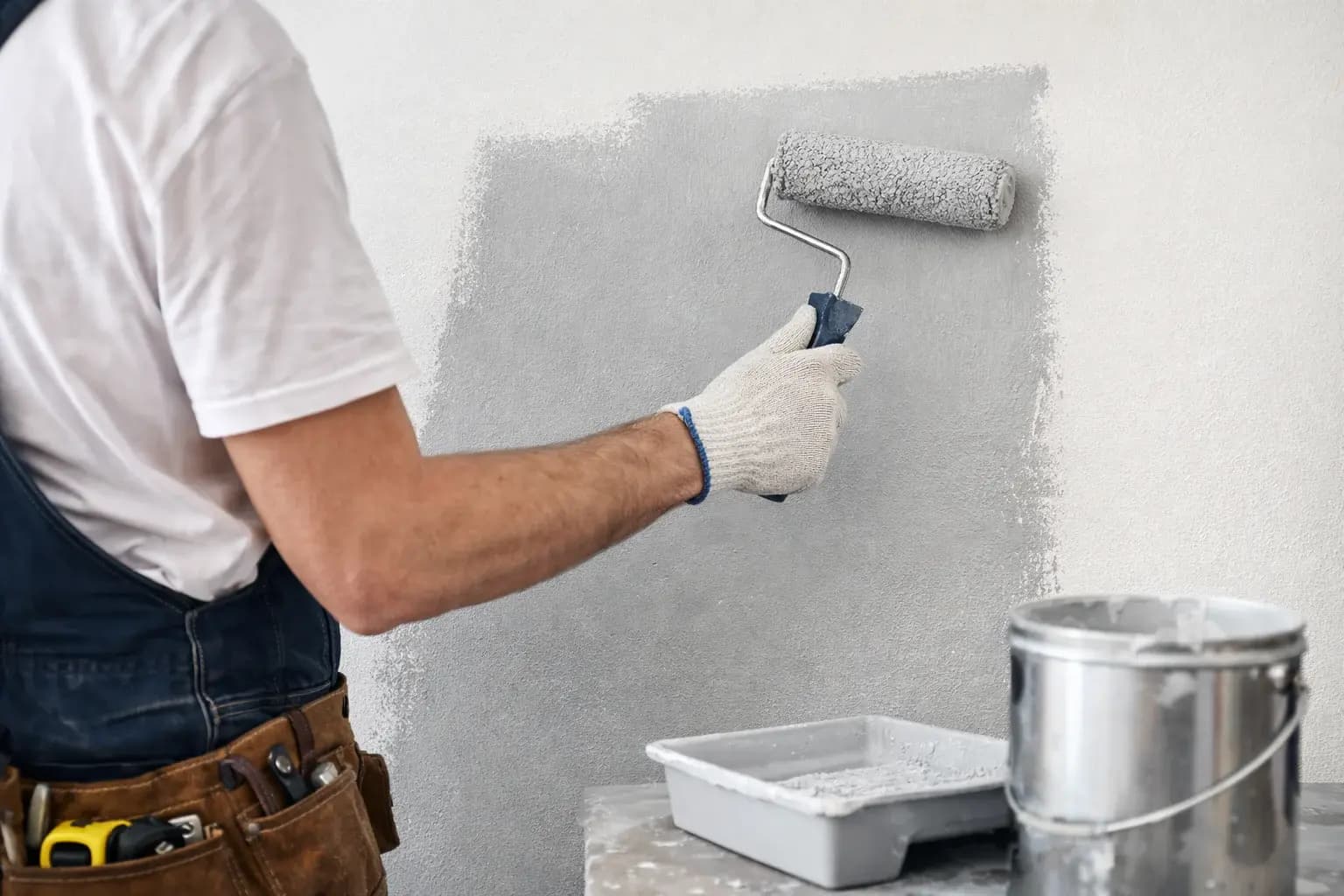
A newly patched area can absorb paint differently from the surrounding ceiling. Agree sealing and decoration separately where needed. A local touch-up may remain visible under side light; a broader ceiling repaint is a different scope and should not be assumed included.
fill and prepare a suitable shallow surface repair. fit a local patch where backing and material condition allow. Limits: Minor dry stable accessible non-structural patches only. No sagging ceilings, active leaks, structural diagnosis, framing repairs, asbestos or hazardous materials.