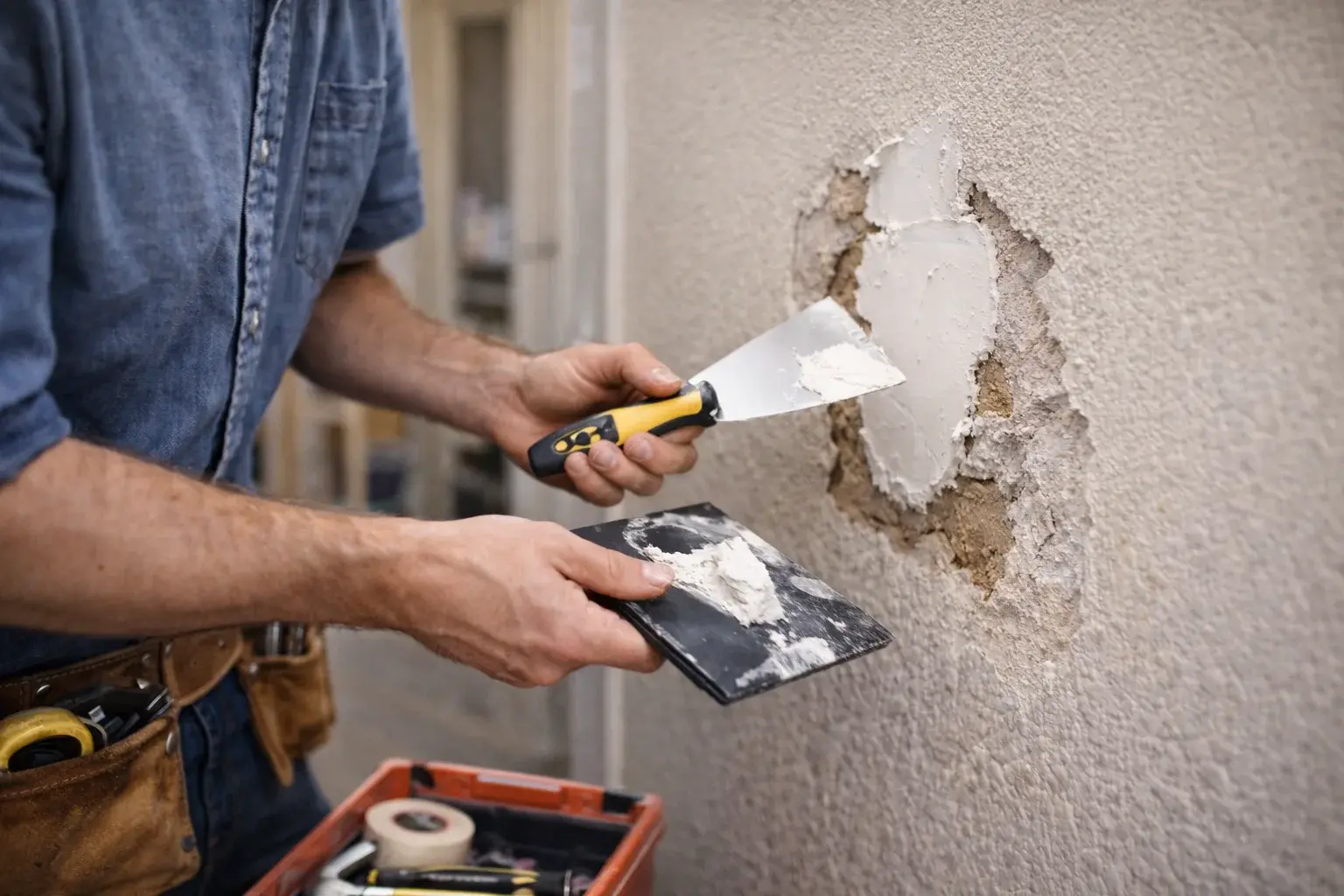
ceiling patch repair can be appropriate when a stable local hole, dent, crack, patch edge or surface mark is visible. Confirm a dry stable minor patch and safe overhead access; sagging, ongoing moisture or uncertain hazardous material needs separate assessment.
Signs: a finish looks damaged and needs preparation before painting or a stable local hole, dent, crack, patch edge or surface mark is visible. Causes: ordinary impact damage or local surface wear or a previous patch or coating that needs preparation.
The repair needs a compatible material and finish. Provide any known product information without disturbing an unknown ceiling to identify it. Suspected asbestos or other hazardous material is outside this service and should be assessed appropriately before any surface preparation.
Overhead work needs a clear protected area beneath it. Explain furniture, floor coverings and fixtures before the visit. Safe access may require more space than the hole itself suggests, and electrical fixtures must not be moved or disconnected as part of patching.
Prepare the accepted small patch, provide suitable ordinary edge support and finish the joints in the required drying stages. Limits: Minor dry stable accessible non-structural patches only. No sagging ceilings, active leaks, structural diagnosis, framing repairs, asbestos or hazardous materials.