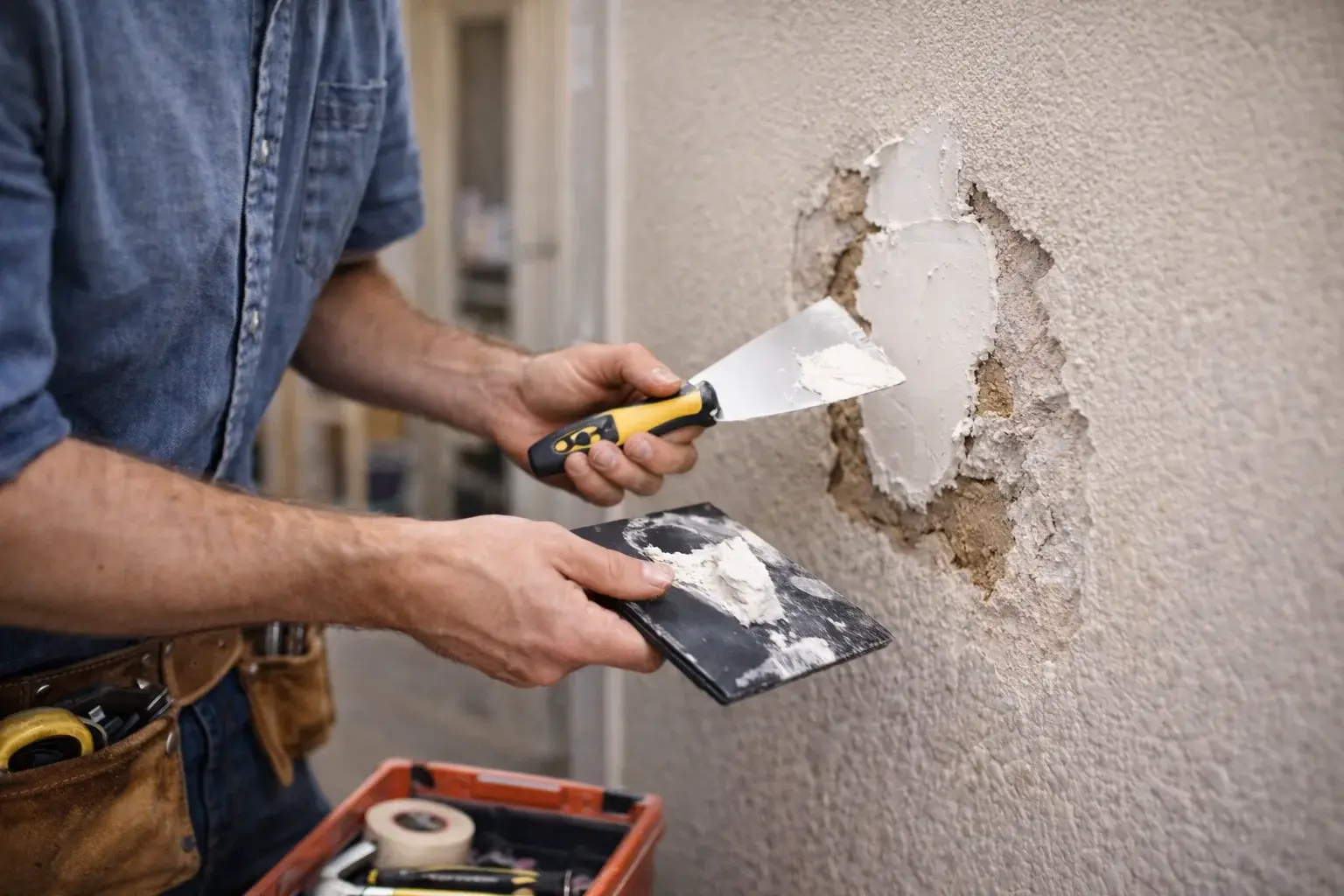
cornice repair can be appropriate when a stable local hole, dent, crack, patch edge or surface mark is visible. Check the ordinary profile, sound attachment and stable surrounding surfaces before choosing a minor repair or short replacement.
Signs: a local area needs a bounded cosmetic repair rather than an assumed structural diagnosis or a finish looks damaged and needs preparation before painting. Causes: minor finish movement at a suitable stable surface or ordinary impact damage or local surface wear.
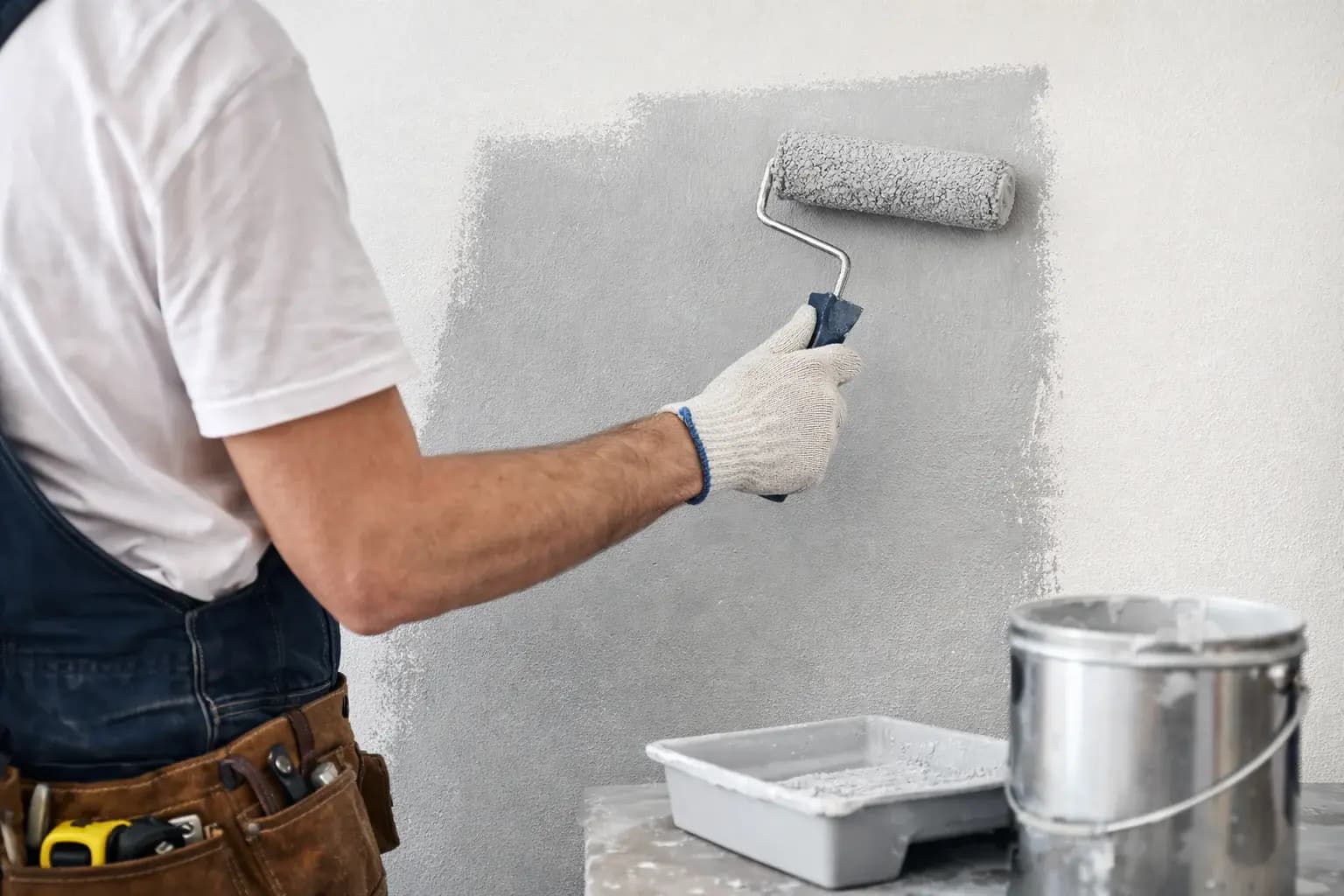
A repaired cornice section may need sealing and paint after drying. Local paint can look different from aged surrounding surfaces. List decoration separately so a cornice repair does not silently become a room repaint or promise an invisible colour match.
Identify the full affected length and adjoining sound sections. A short compatible replacement can be different from renewing an entire room. Availability of a matching profile affects the options, so confirm the proposed material before removing the original cornice.
fill and prepare a suitable shallow surface repair. fit a local patch where backing and material condition allow. Limits: Minor ordinary stable cornice repairs and short matching sections only. No ornate heritage restoration, large loose sections, structural movement diagnosis or hazardous materials.