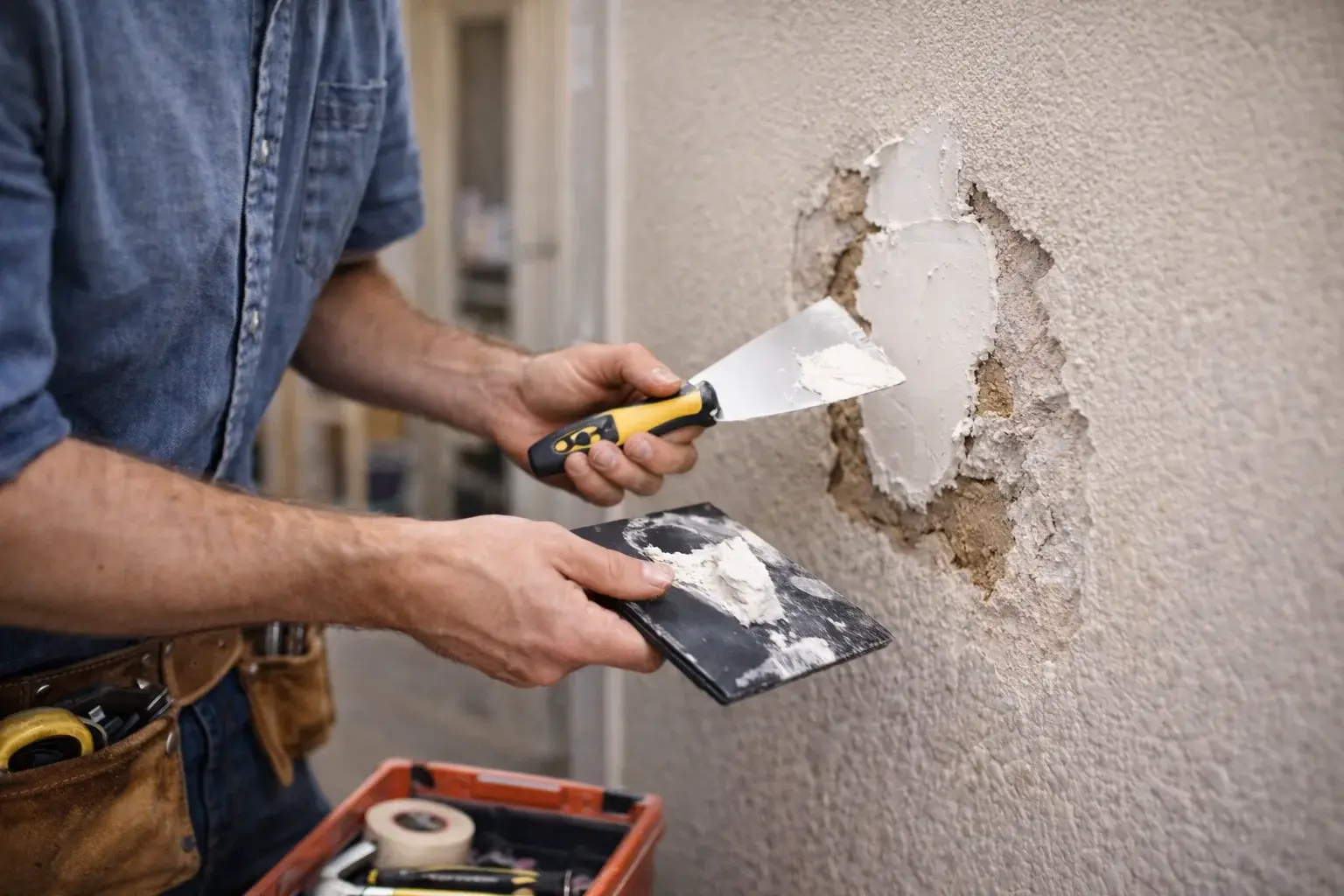
cornice repair can be appropriate when a stable local hole, dent, crack, patch edge or surface mark is visible. Check the ordinary profile, sound attachment and stable surrounding surfaces before choosing a minor repair or short replacement.
Signs: a stable local hole, dent, crack, patch edge or surface mark is visible or a local area needs a bounded cosmetic repair rather than an assumed structural diagnosis. Causes: ordinary impact damage or local surface wear or a previous patch or coating that needs preparation.
Joint finishing needs to suit the profile without flattening its shape. Existing paint build-up or textured surfaces can affect the match. Agree the intended finish before work starts, including whether remaining surrounding defects are outside the quoted minor repair.
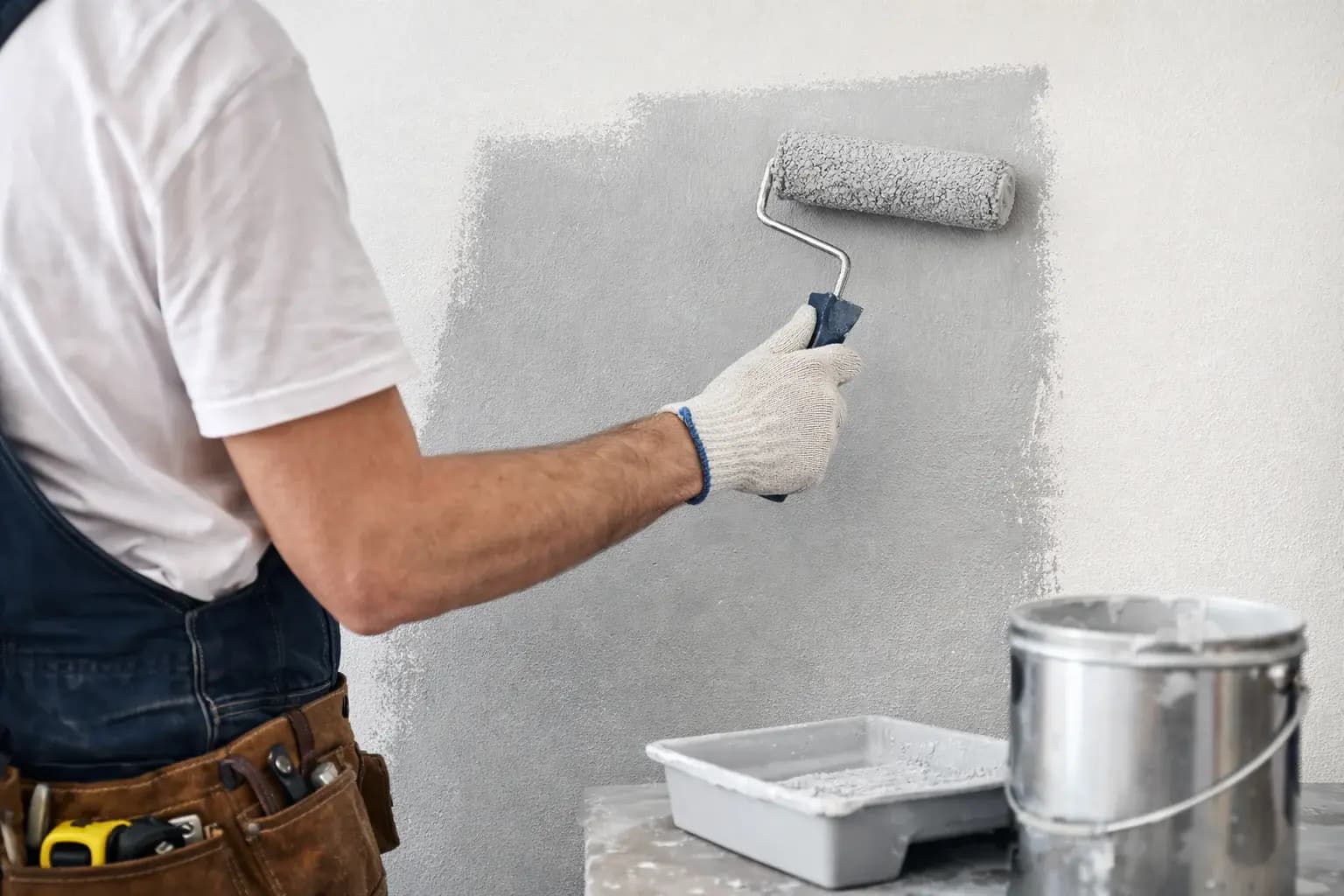
A repaired cornice section may need sealing and paint after drying. Local paint can look different from aged surrounding surfaces. List decoration separately so a cornice repair does not silently become a room repaint or promise an invisible colour match.
Allow finishing materials to dry and agree the paint boundary. Report recurring separation rather than repeatedly covering a moving joint. Limits: Minor ordinary stable cornice repairs and short matching sections only. No ornate heritage restoration, large loose sections, structural movement diagnosis or hazardous materials.