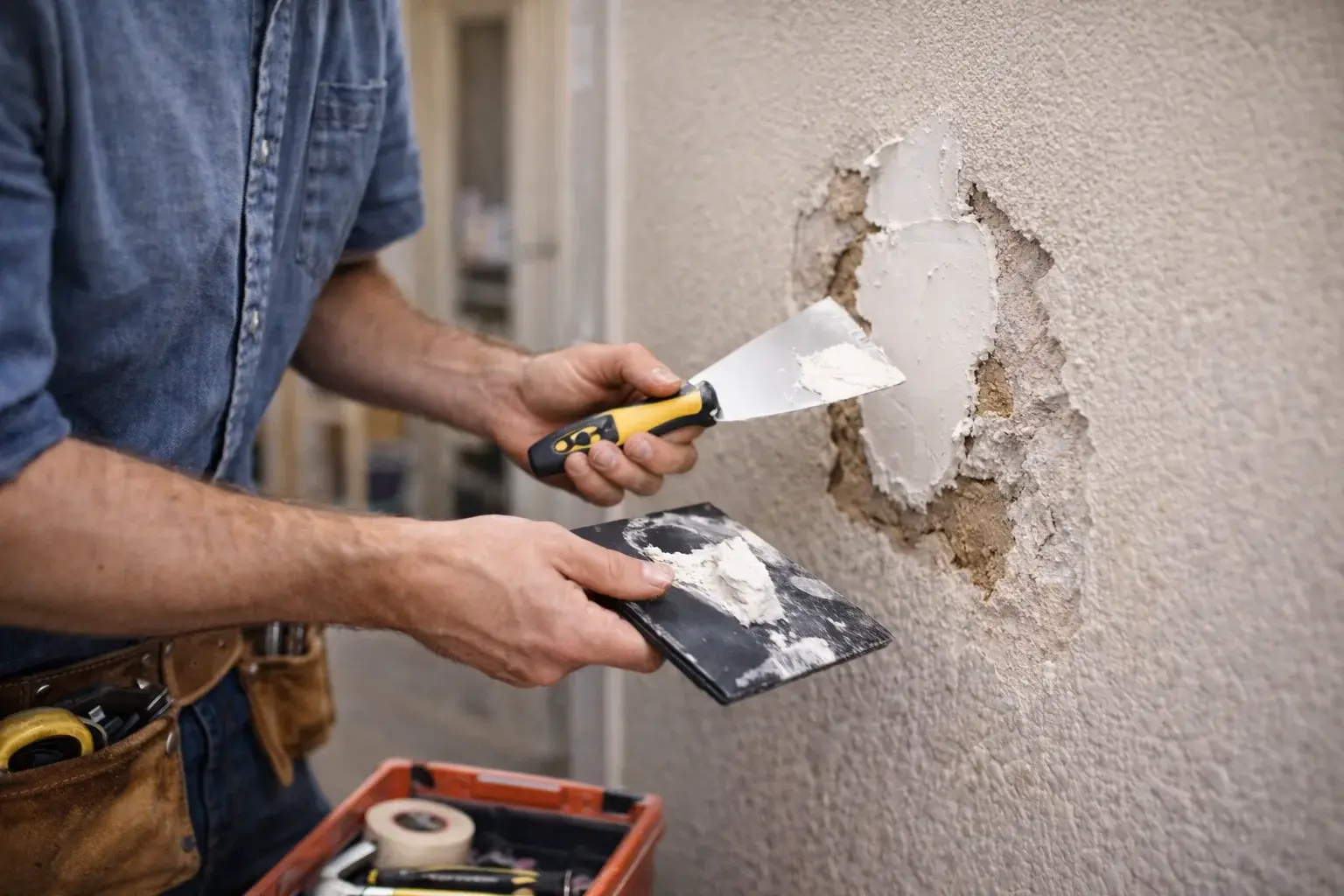
cornice repair can be appropriate when a stable local hole, dent, crack, patch edge or surface mark is visible. Check the ordinary profile, sound attachment and stable surrounding surfaces before choosing a minor repair or short replacement.
Signs: a local area needs a bounded cosmetic repair rather than an assumed structural diagnosis or a finish looks damaged and needs preparation before painting. Causes: a previous patch or coating that needs preparation or minor finish movement at a suitable stable surface.
The remaining cornice and adjacent surfaces must be sound enough for ordinary work. Large loose or heavy sections are outside this minor service. Do not pull at a suspect section for photographs; describe the concern so suitable next steps can be discussed.
A repaired cornice section may need sealing and paint after drying. Local paint can look different from aged surrounding surfaces. List decoration separately so a cornice repair does not silently become a room repaint or promise an invisible colour match.
fill and prepare a suitable shallow surface repair. fit a local patch where backing and material condition allow. Limits: Minor ordinary stable cornice repairs and short matching sections only. No ornate heritage restoration, large loose sections, structural movement diagnosis or hazardous materials.