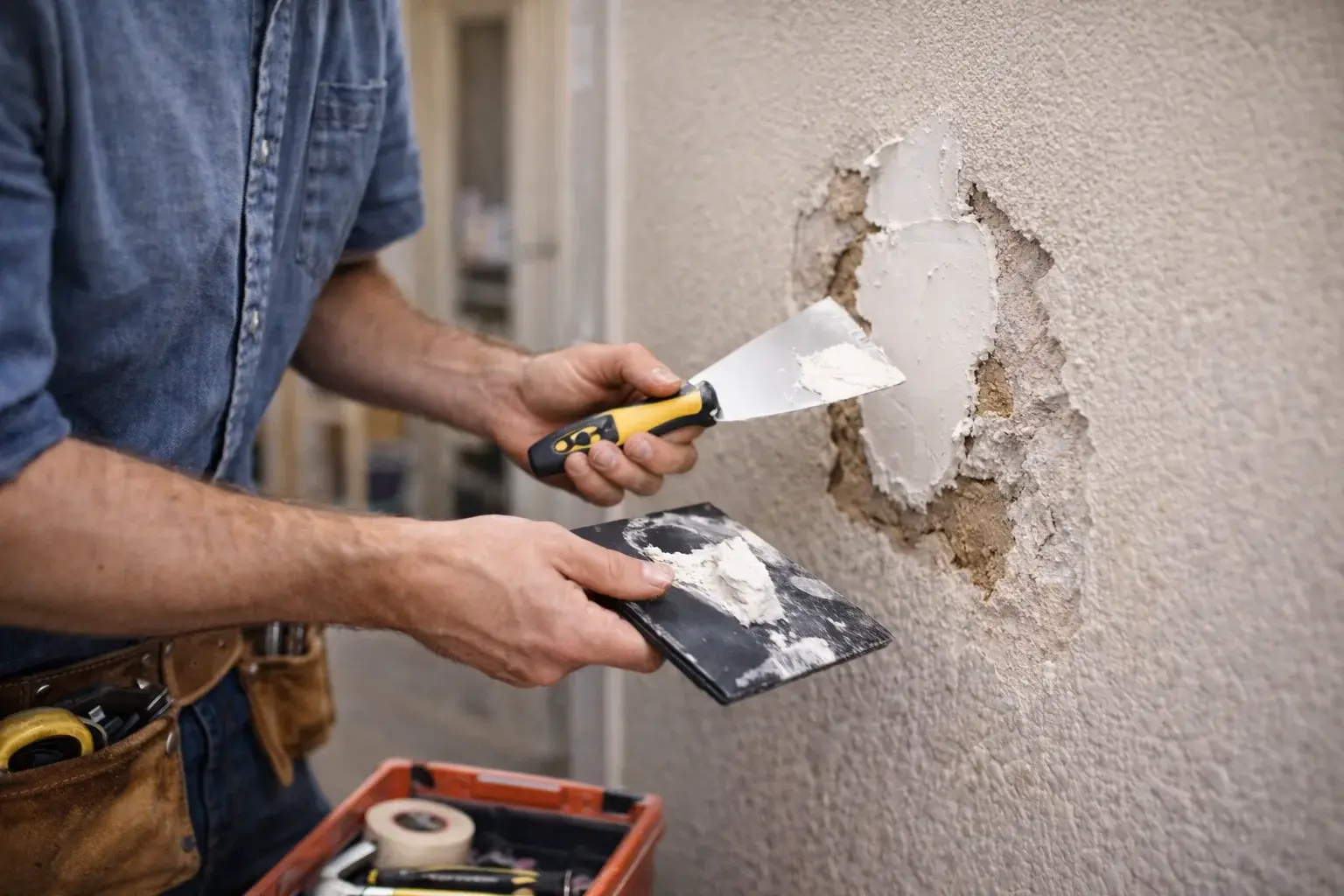
cornice repair can be appropriate when a stable local hole, dent, crack, patch edge or surface mark is visible. Check the ordinary profile, sound attachment and stable surrounding surfaces before choosing a minor repair or short replacement.
Signs: a finish looks damaged and needs preparation before painting or a stable local hole, dent, crack, patch edge or surface mark is visible. Causes: minor finish movement at a suitable stable surface or ordinary impact damage or local surface wear.
Cornice profiles differ in projection and shape, even where the front view looks similar. Send end or side details where already visible. The service covers ordinary profiles and minor work, not replication of ornate heritage mouldings or specialist decorative restoration.
Internal and external corners need compatible joints and a sound adjoining run. Show both sides of the corner in the enquiry. Filling a gap alone may not address a poorly fitted piece, while movement in the surrounding building requires a separate assessment.
Allow finishing materials to dry and agree the paint boundary. Report recurring separation rather than repeatedly covering a moving joint. Limits: Minor ordinary stable cornice repairs and short matching sections only. No ornate heritage restoration, large loose sections, structural movement diagnosis or hazardous materials.