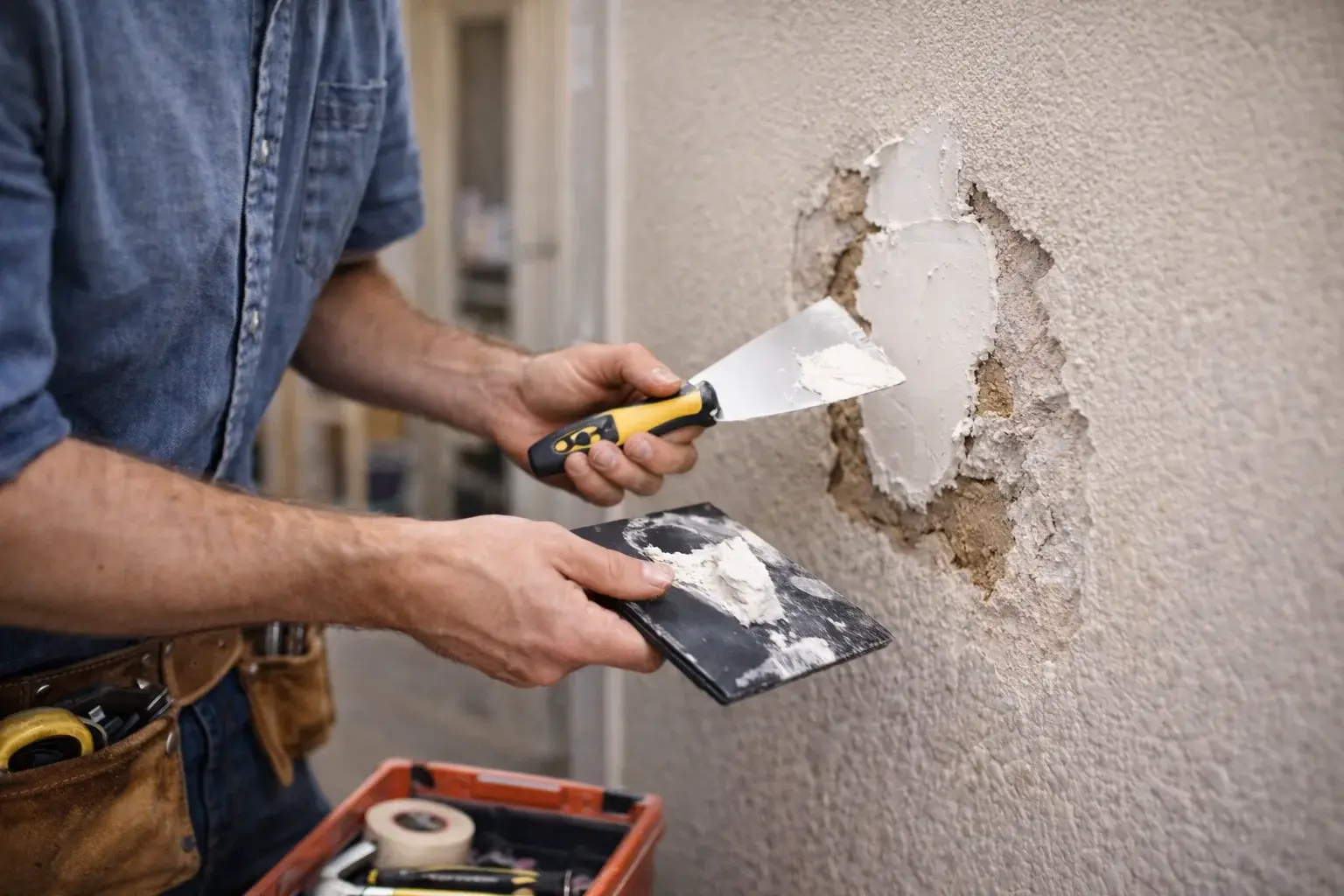
A practical cornice repair decision starts with the affected item, its condition and the surrounding materials. Repair suitable minor joints or fit an agreed short compatible cornice section, then prepare the accepted area for decoration.
Signs: a finish looks damaged and needs preparation before painting or a local area needs a bounded cosmetic repair rather than an assumed structural diagnosis. Causes: minor finish movement at a suitable stable surface or a previous patch or coating that needs preparation.
Internal and external corners need compatible joints and a sound adjoining run. Show both sides of the corner in the enquiry. Filling a gap alone may not address a poorly fitted piece, while movement in the surrounding building requires a separate assessment.
Where a local piece is unsuitable for repair, a matching short section may be considered. The scope should identify removal, fitting and joint finishing. It does not imply rebuilding the ceiling edge or replacing hidden framing behind the decorative material.
Allow finishing materials to dry and agree the paint boundary. Report recurring separation rather than repeatedly covering a moving joint. Limits: Minor ordinary stable cornice repairs and short matching sections only. No ornate heritage restoration, large loose sections, structural movement diagnosis or hazardous materials.