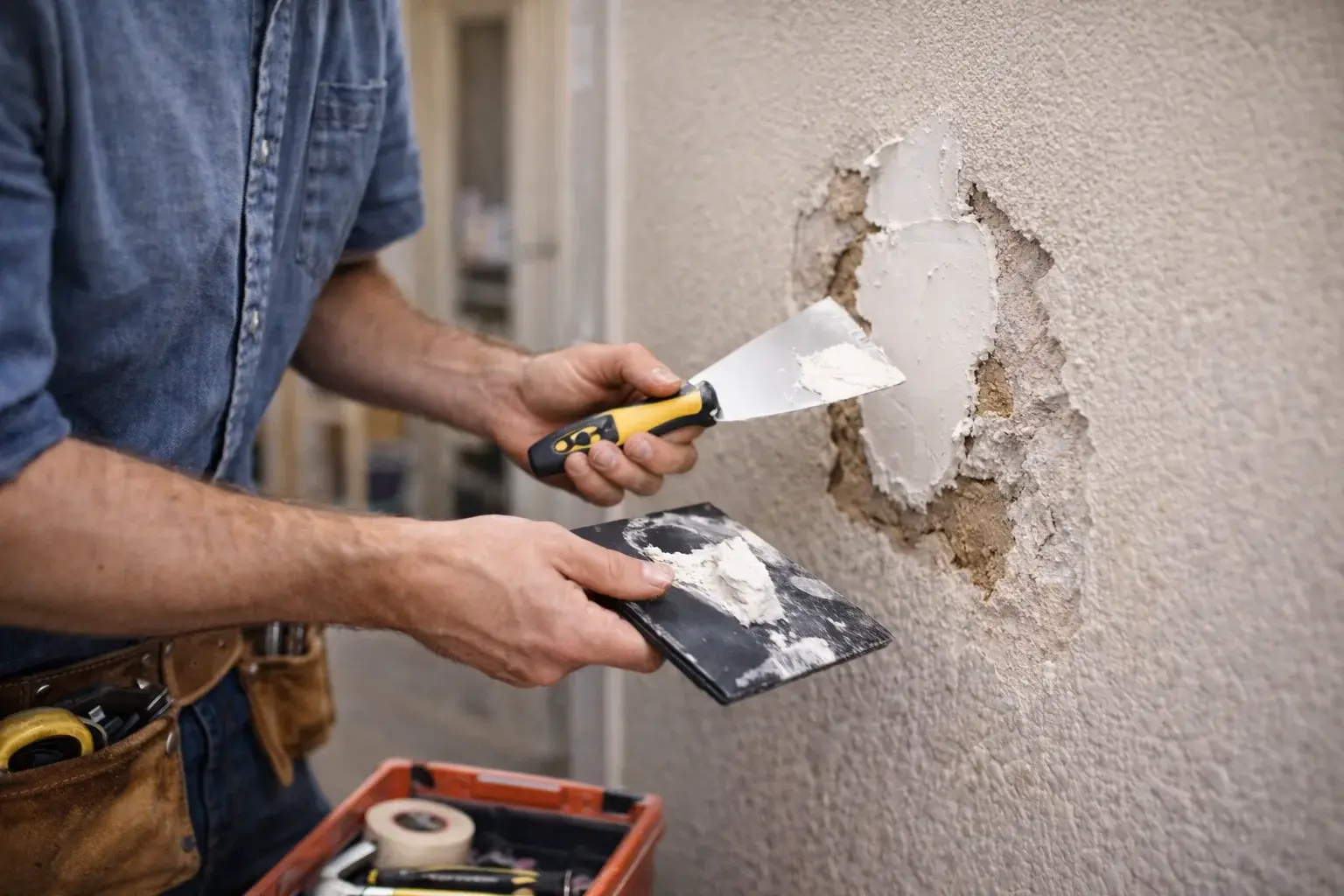
A practical cornice repair decision starts with the affected item, its condition and the surrounding materials. Repair suitable minor joints or fit an agreed short compatible cornice section, then prepare the accepted area for decoration.
Signs: a stable local hole, dent, crack, patch edge or surface mark is visible or a local area needs a bounded cosmetic repair rather than an assumed structural diagnosis. Causes: minor finish movement at a suitable stable surface or a previous patch or coating that needs preparation.
Identify the full affected length and adjoining sound sections. A short compatible replacement can be different from renewing an entire room. Availability of a matching profile affects the options, so confirm the proposed material before removing the original cornice.
Internal and external corners need compatible joints and a sound adjoining run. Show both sides of the corner in the enquiry. Filling a gap alone may not address a poorly fitted piece, while movement in the surrounding building requires a separate assessment.
fill and prepare a suitable shallow surface repair. fit a local patch where backing and material condition allow. Limits: Minor ordinary stable cornice repairs and short matching sections only. No ornate heritage restoration, large loose sections, structural movement diagnosis or hazardous materials.