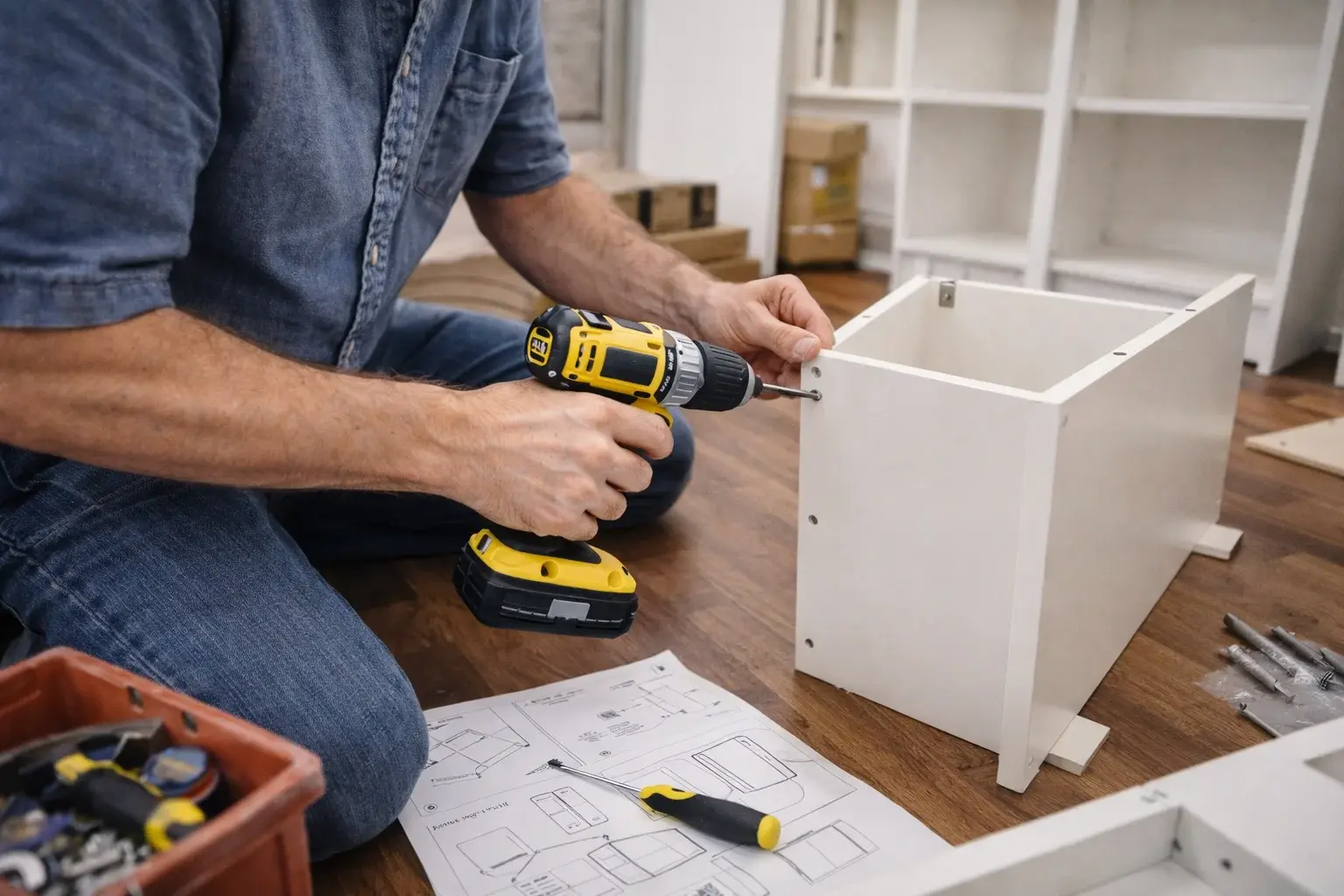
minor furniture repair can be appropriate when a supplied item, trim or fitting is loose, incomplete, damaged or needs adjustment. Loose hardware must be distinguished from a failed load-bearing component. Stability concerns need assessment before continued use.
Signs: a supplied item, trim or fitting is loose, incomplete, damaged or needs adjustment or the component no longer sits level, opens or supports ordinary use as intended. Causes: an incomplete assembly or a mismatched replacement component or local damage that does not establish a structural requirement.
Movement at a joint may indicate more than a loose screw. Split material, pulled inserts or failed load-bearing connections can require specialist work or replacement. Stop using an unstable item and explain what moves rather than trying repeated temporary fixes.
A rocking item may involve the floor, adjustable feet or the item itself. Show the setting and describe whether the movement is new. Load-bearing reconstruction is excluded, and a furniture item with unresolved structural damage should not be returned to use.
The agreed service covers assessed minor mechanical fixings and non-specialist household furniture adjustments. Exclusions: Upholstery, antiques/conservation, powered mechanisms, load-bearing reconstruction, cabinet hinges, drawers, assembly of new items.